Eat, sleep, work
After years of flying down to Singapore for work, my editor brought up the idea of making a trip to Bangkok as well, seeing as how my market coverage does technically span across all of Southeast Asia. I quickly agreed for three major reasons. One, Thailand is a fast-growing asset and wealth management market with a ton of global players looking to get in on the action, making it an increasingly interesting space to write on. Two, while Singapore remains heads and shoulders above other cities in the region as a funds hub, it does get a bit repetitive to keep going back to the same place and meet the same people over and over again. Three, Bangkok is a street food paradise.
In preparation for the work trip, I made two custom maps on Google. One showing the locations of all my of interviews and with various CEOs and company founders in the local investment industry, and one showing all the street food stalls I intended to check out in between meetings and after work. It’s not even that I’m a huge fan of Thai food in particular – I’m fairly neutral about it in the context of other Asian cuisines – but I felt it was only proper for me to do Bangkok the right way, and to me that means diving into one of the top street food scenes anywhere in the world.
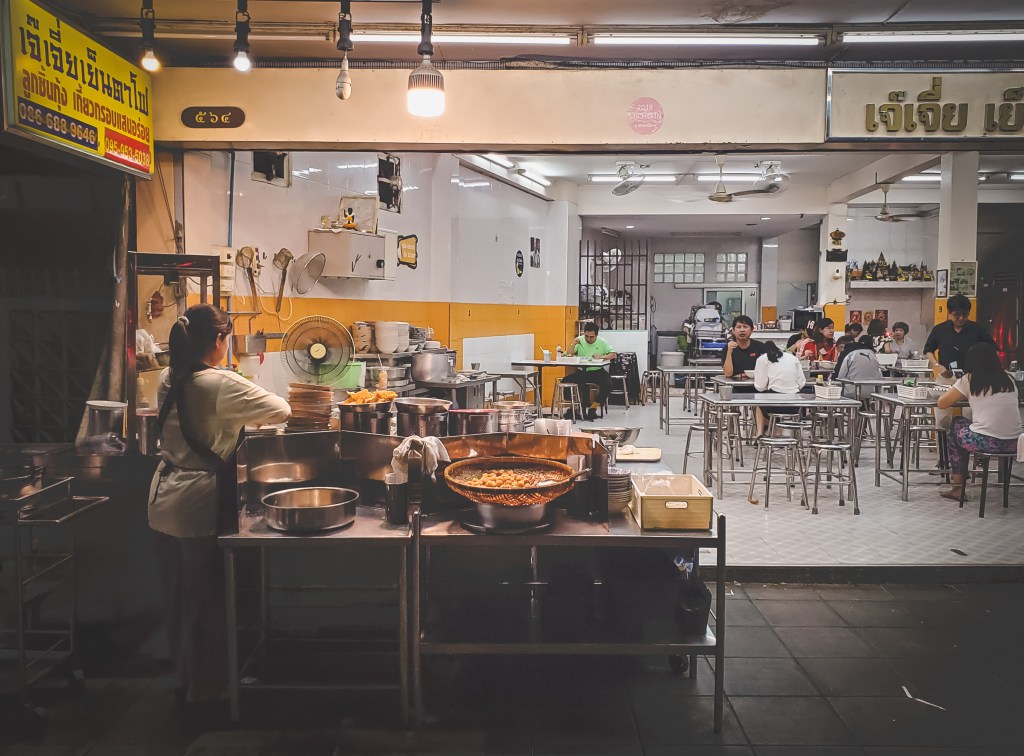
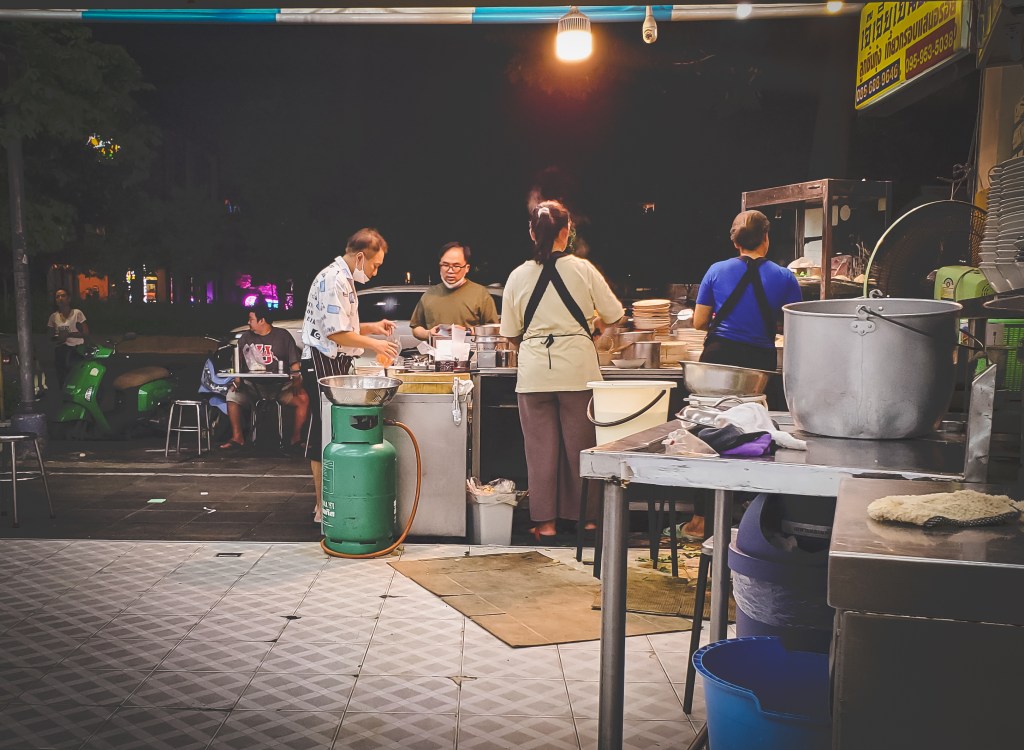
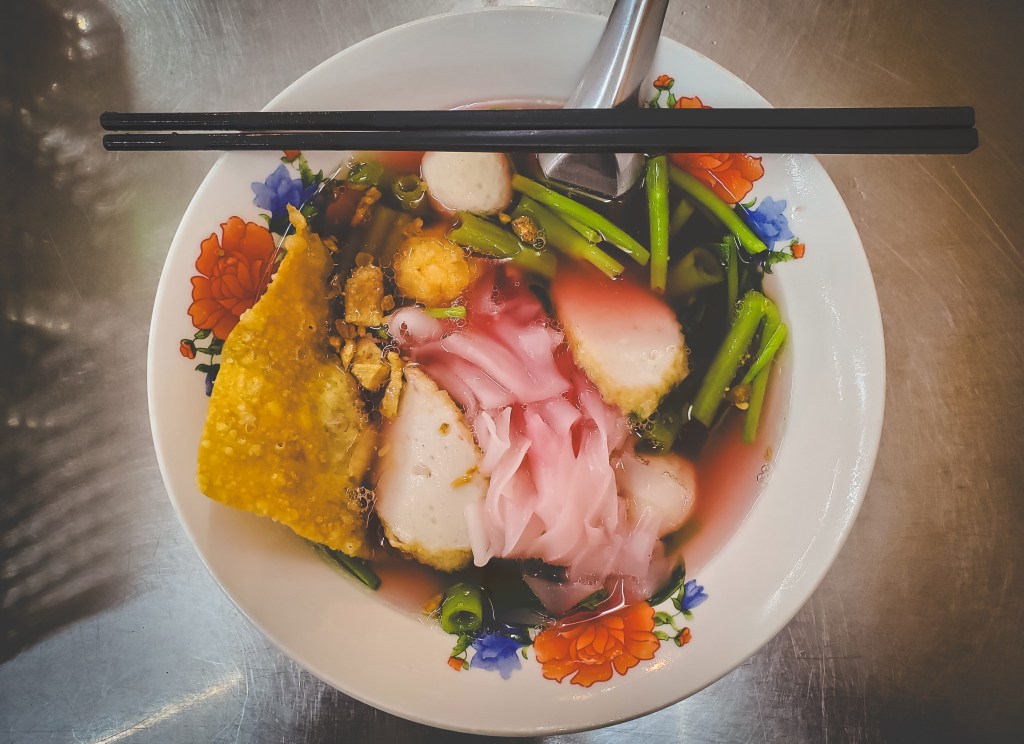
And I hit the ground running. After checking into my hotel, I headed out to grab some evening grub at Jia Yong Tau Foo, a noodle shop specialising in a noodle dish with a distinctive pink hue derived from one of its ingredients – fermented soy bean paste. The noodles are served in a broth with fish balls, fried wonton, and some veggies, and there’s a nice kick to it that doesn’t overwhelm some of the more delicate flavours of the dish.
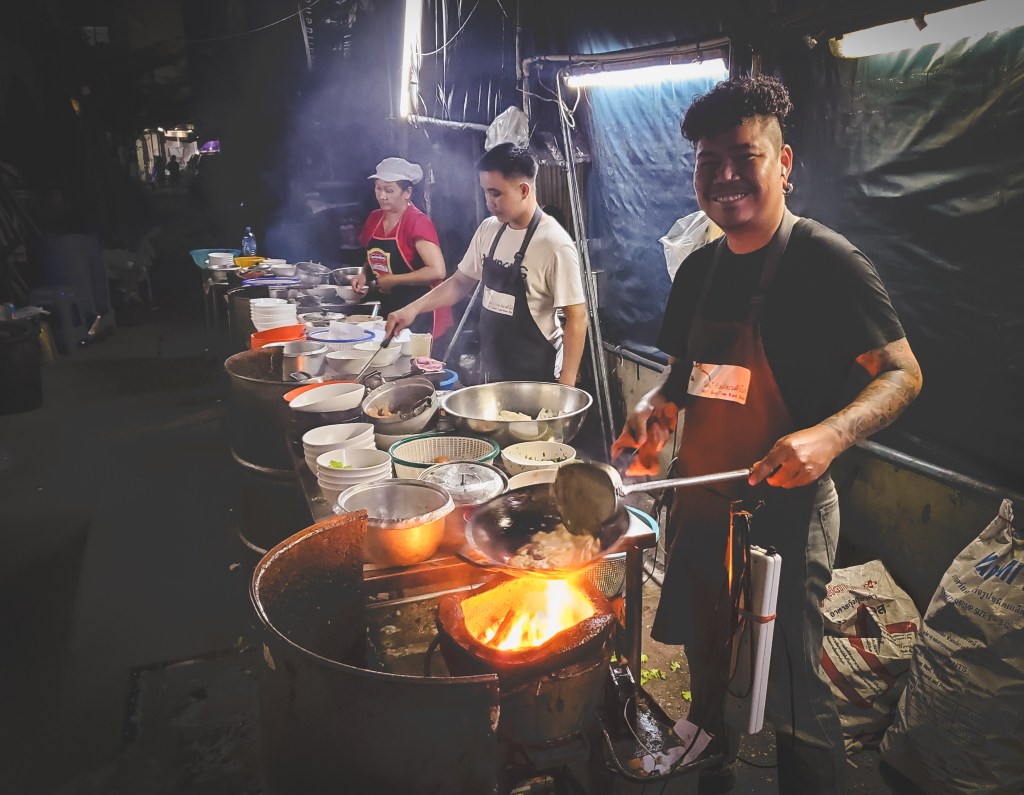
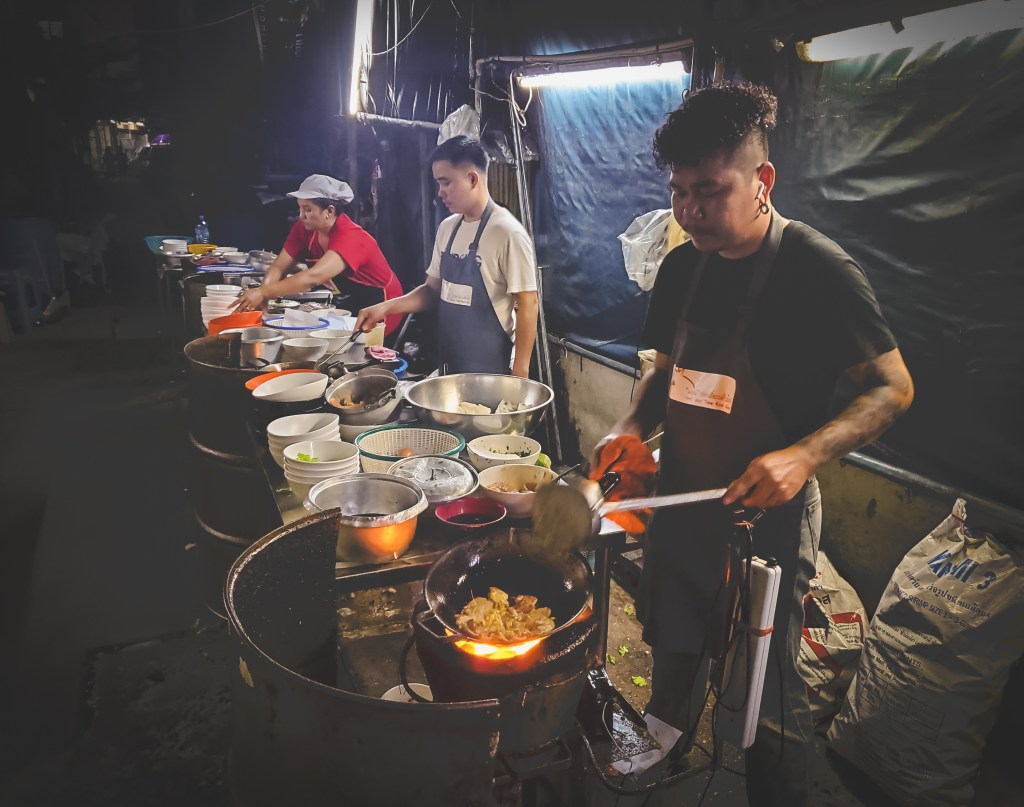
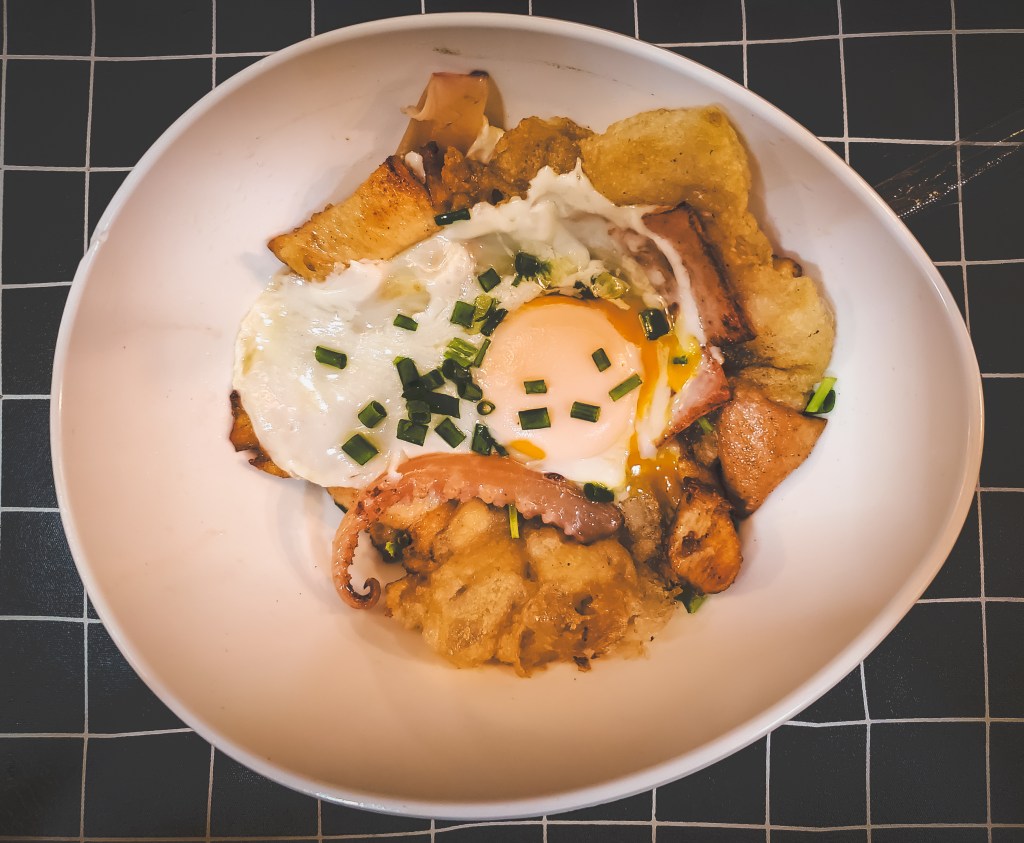
My next stop was Ann Guay Tiew Kua Gai to try the Thai version of kway teow, a stir-fried rice noodle dish popular throughout Southeast Asia. The interesting bit about how they do it in Bangkok is that they fry the noodle in one big clump, almost like a pancake, so you get a crispy shell on the outside and soft, chewy noodles on the inside. They’ve got a variety of noodle dishes on their menu, but I got the one with fried chicken, fried cuttlefish, and a runny egg. Super delicious. There’s actually a bunch of kway teow restaurants in the area, and I wanted to try another one around the corner, Suan Mali Chicken Noodle, but it was closed, unfortunately.
Day two
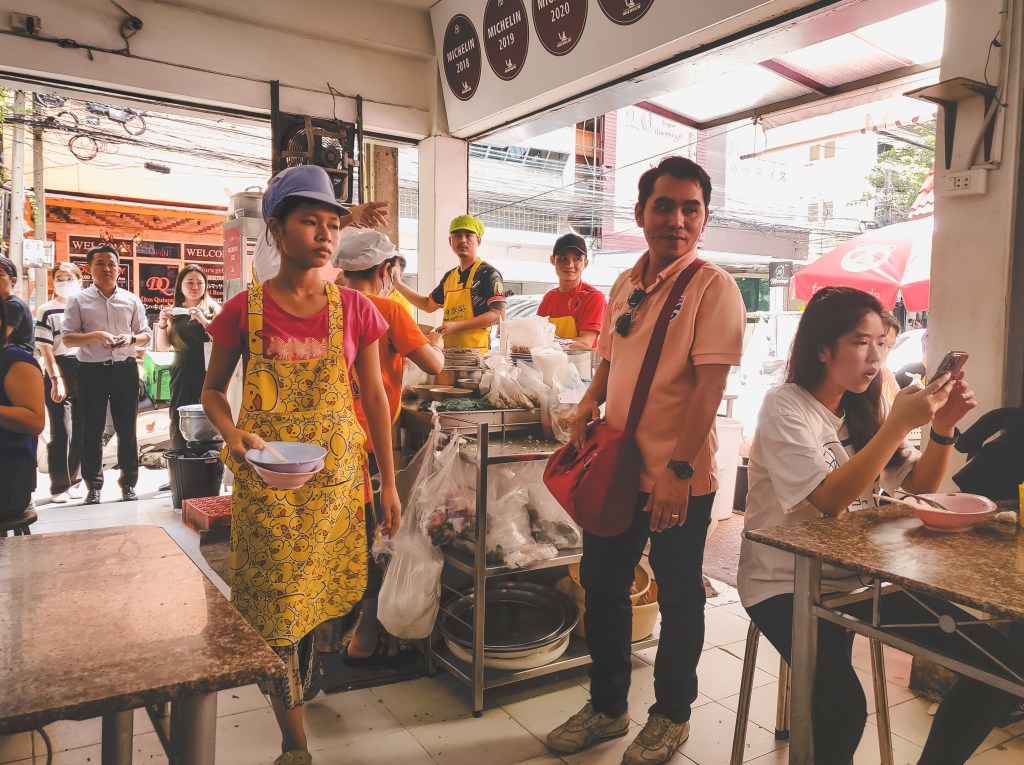
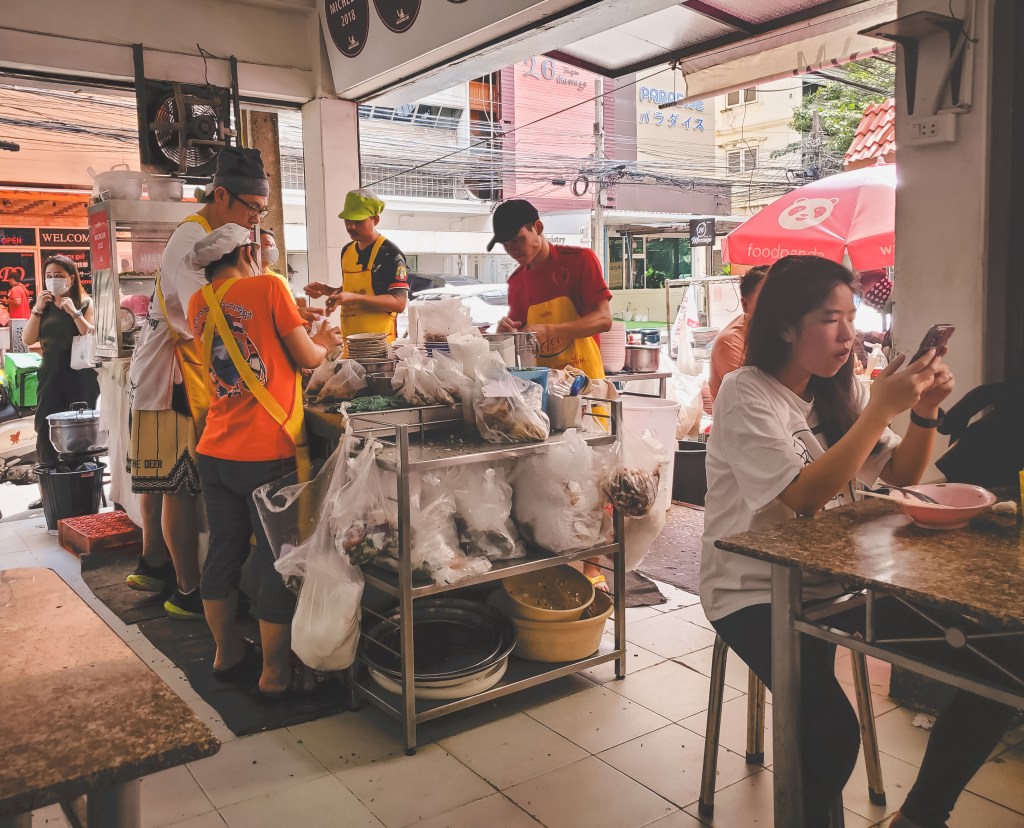
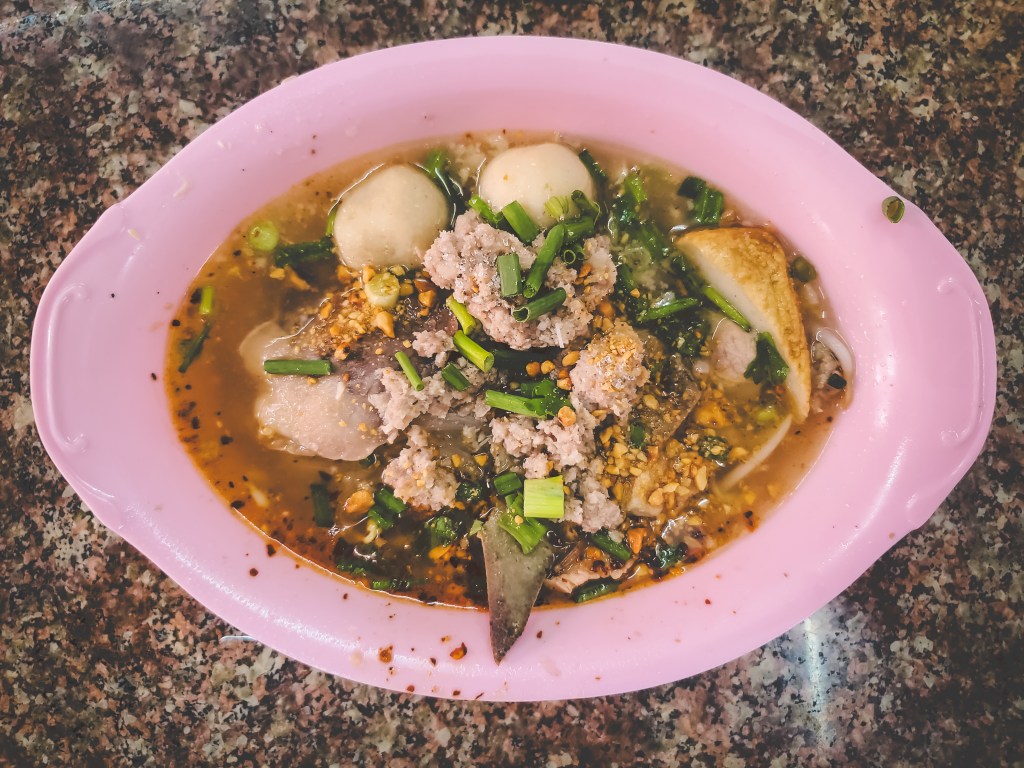
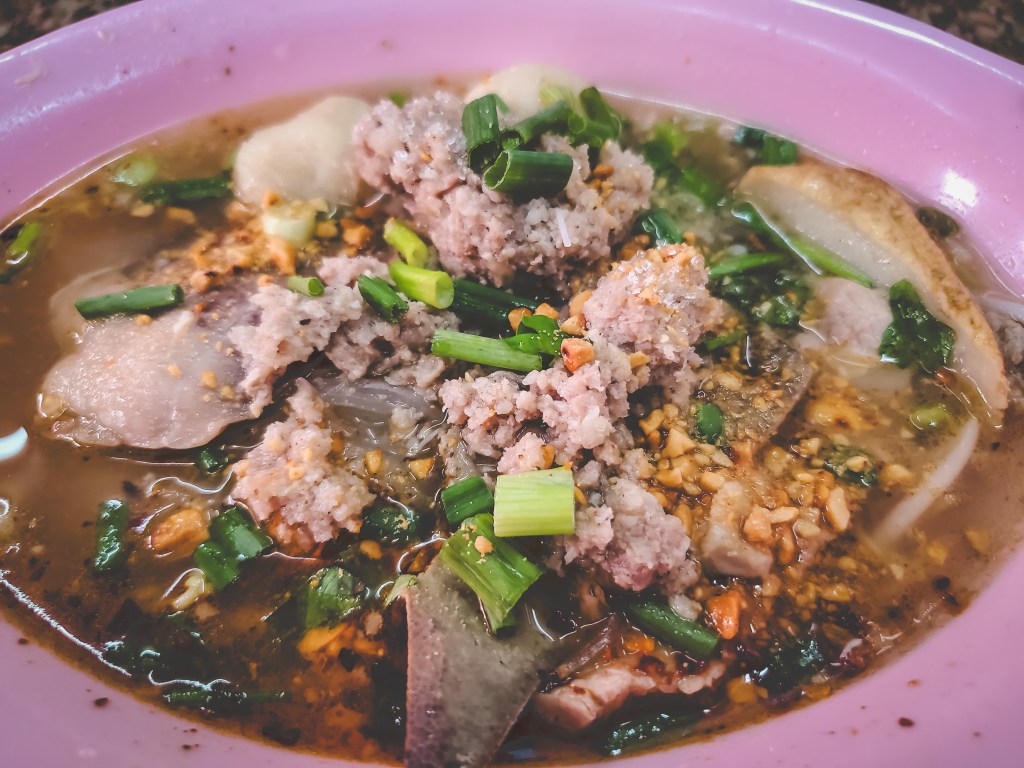
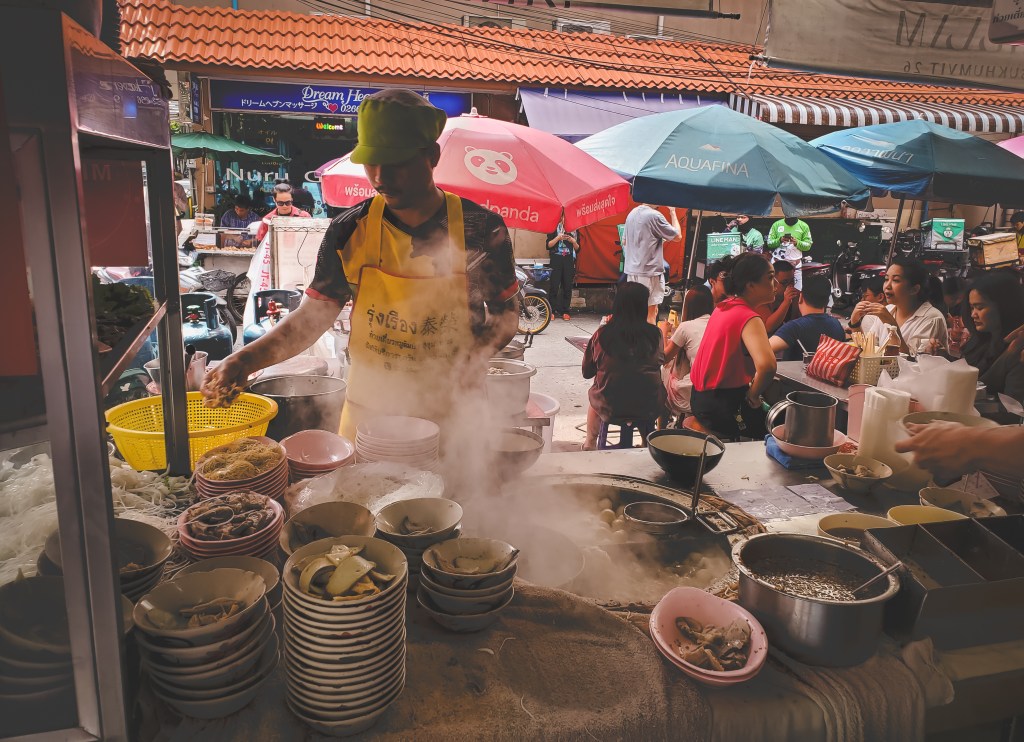
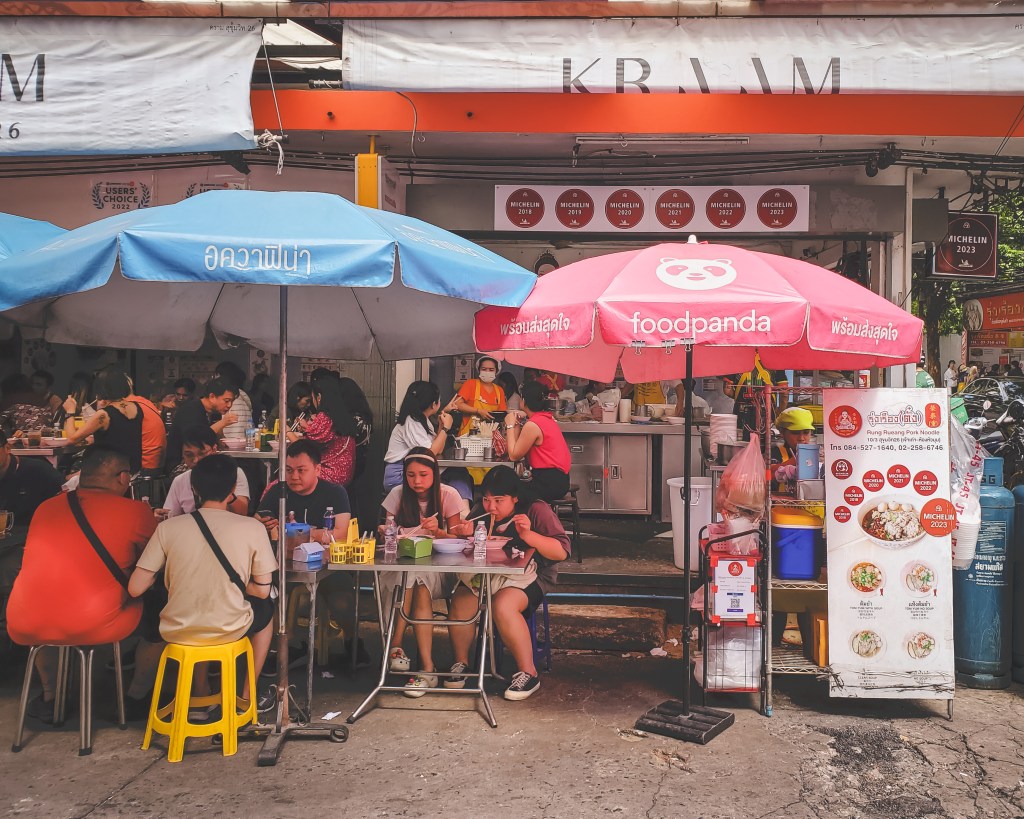
After wrapping up some morning meetings for work, I headed over to Rung Rueang Pork Noodle to get some lunch. This place is known for its Thai-style pork noodles served with a variety of broths (or even as a dry noodle), toppings, and types of noodle. I ordered a bowl with a tom yum soup base, mixed meats, and medium noodle, based off of a recommendation I saw online. The broth was packed with amazing flavours and the rest of the ingredients gave it a nice balance – though I was definitely sweating off the spice halfway through the meal.
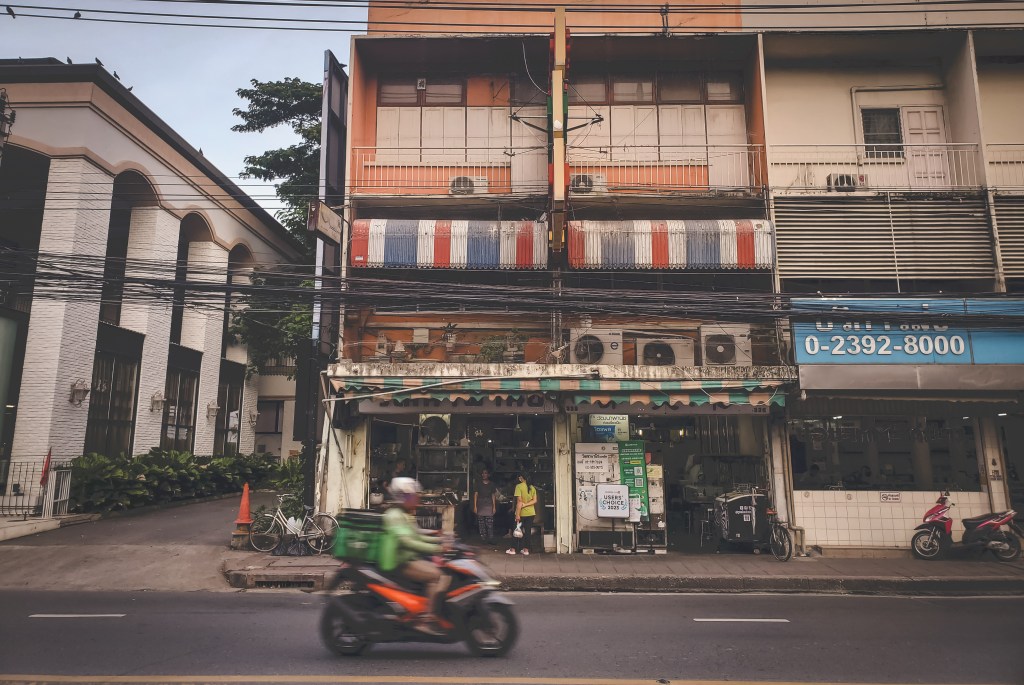
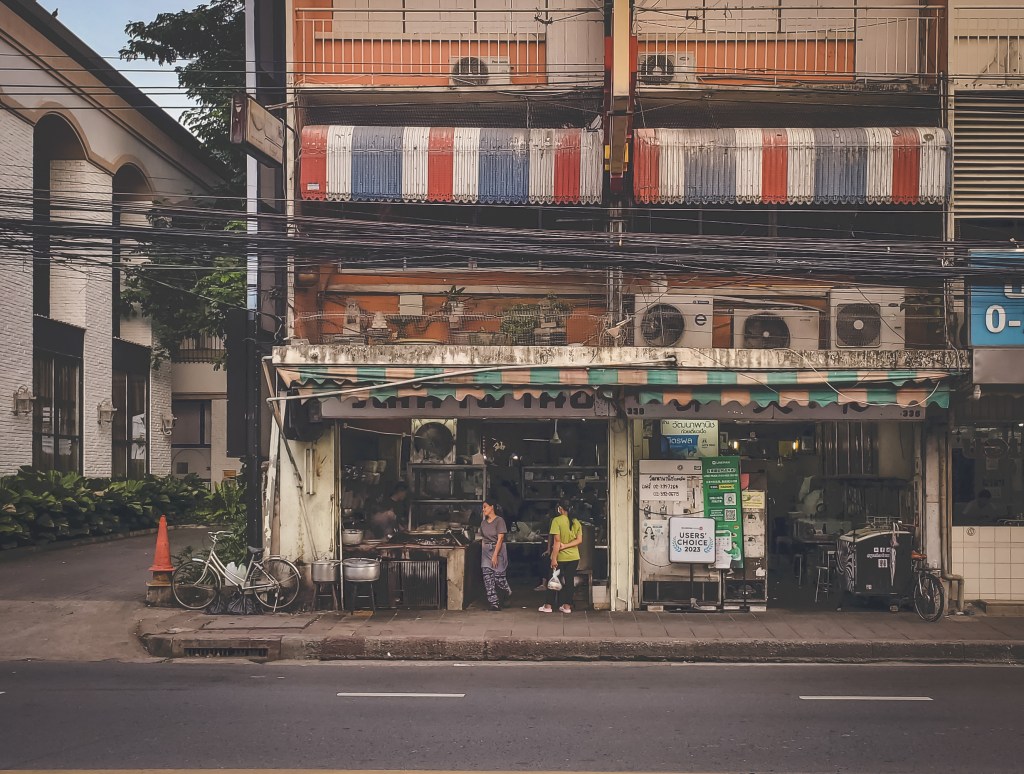
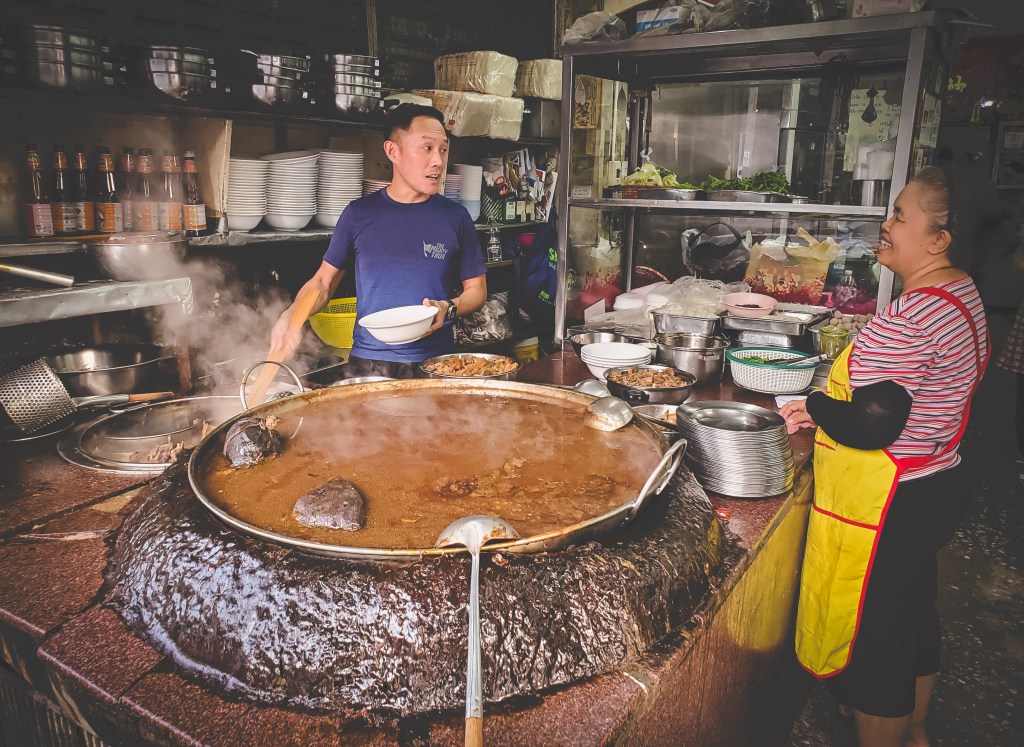
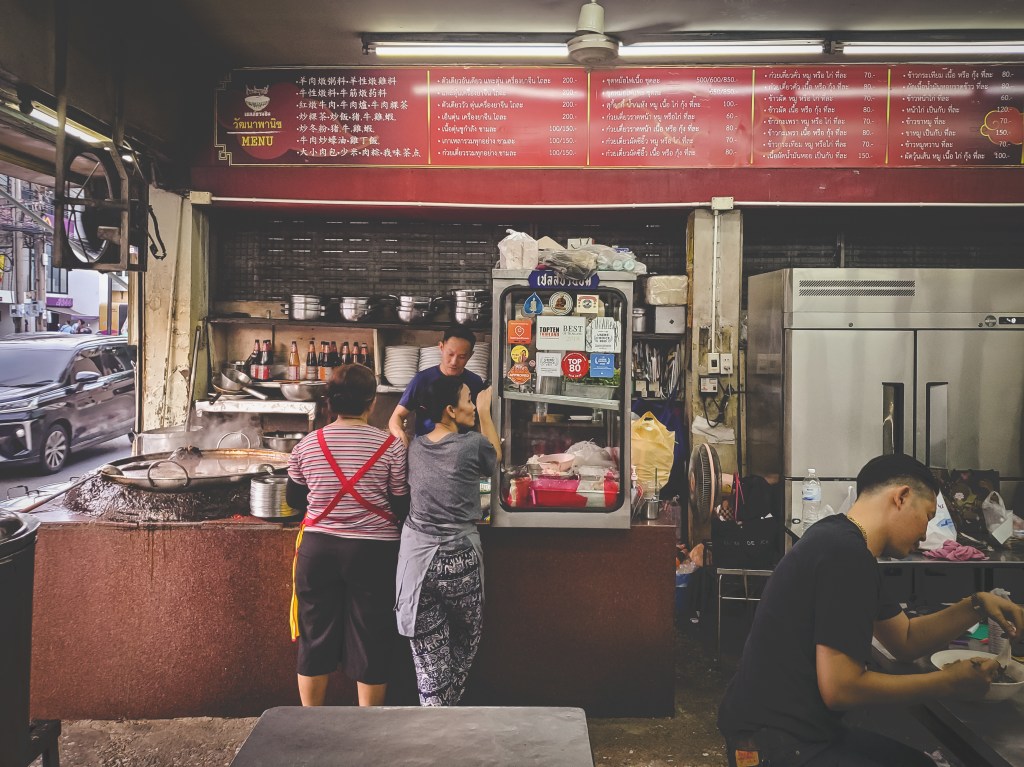
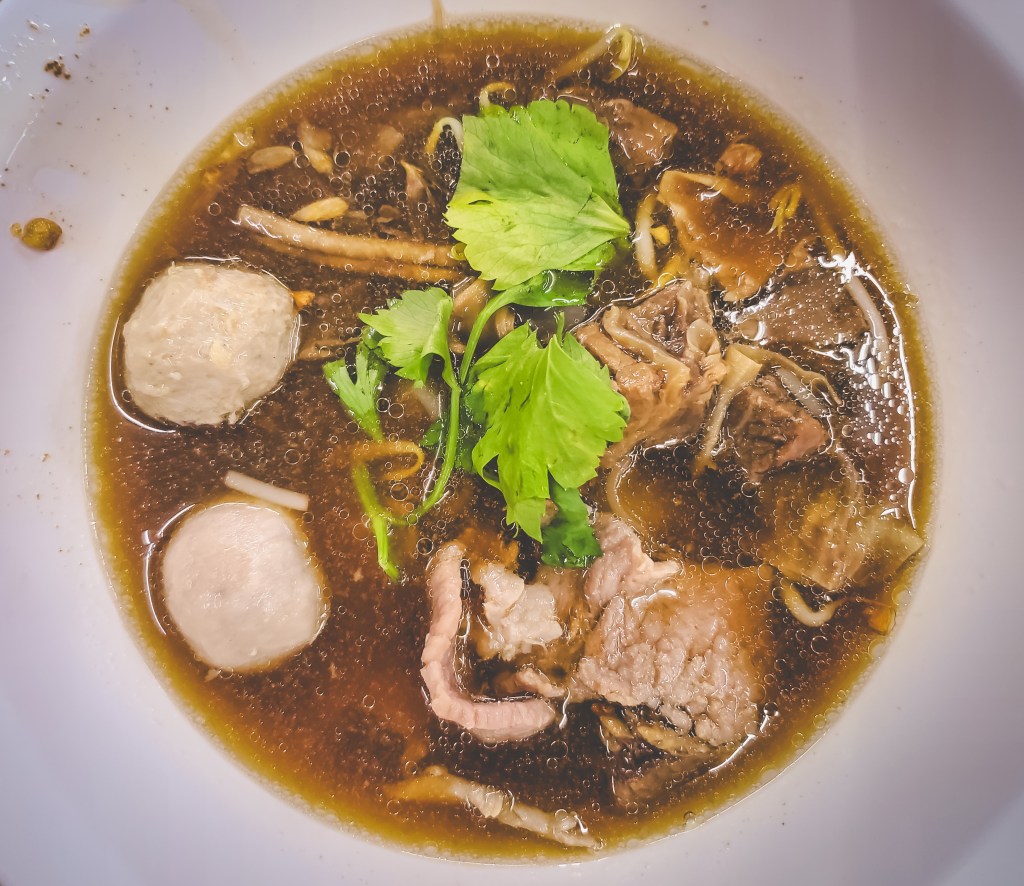
For an afternoon snack, I trekked out to the Ekkamai neighbourhood to try Wattana Panich, a restaurant who’s claim to fame is its massive vat of dark, brown beef stock that has reportedly been brewing non-stop for nearly half a century. I ordered two dishes: the soup noodles with sliced beef, stewed beef, and beef balls and the Gao-Lao, which is essentially the same ingredients but served with rice instead of noodles. The soup noodle was the perfect comfort food dish – silky-soft flat rice noodles in a broth that was surprisingly delicate in its flavour profile. The Gao-Lao was less enjoyable, probably because the rice ended up soaking up most of the broth.
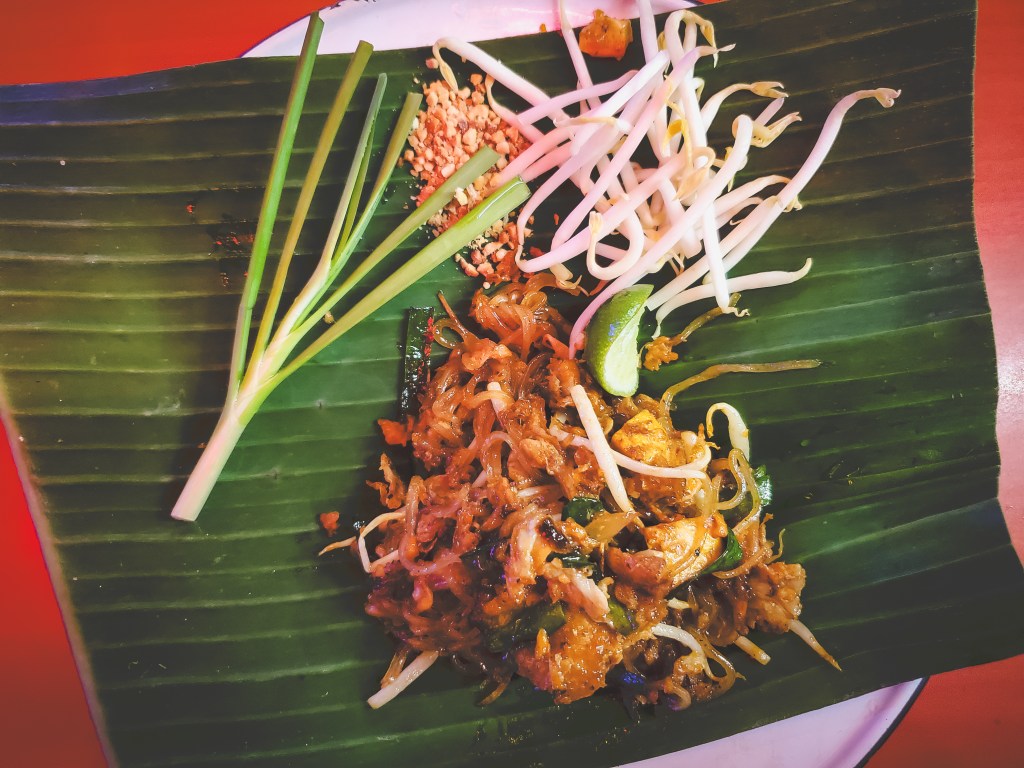
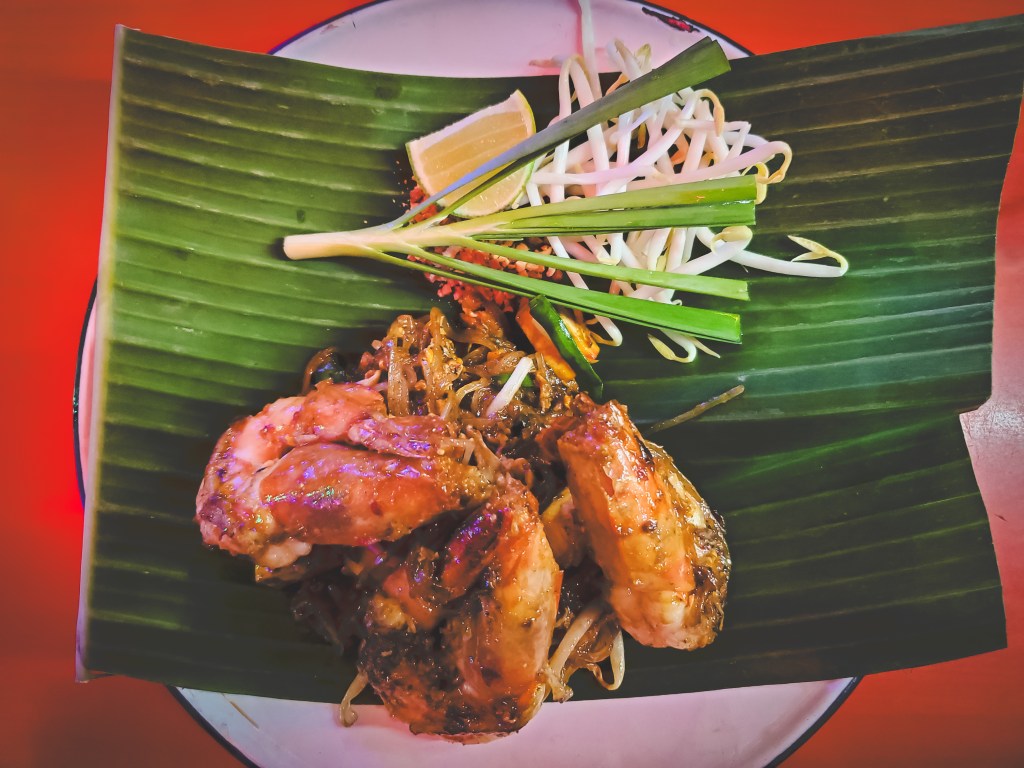
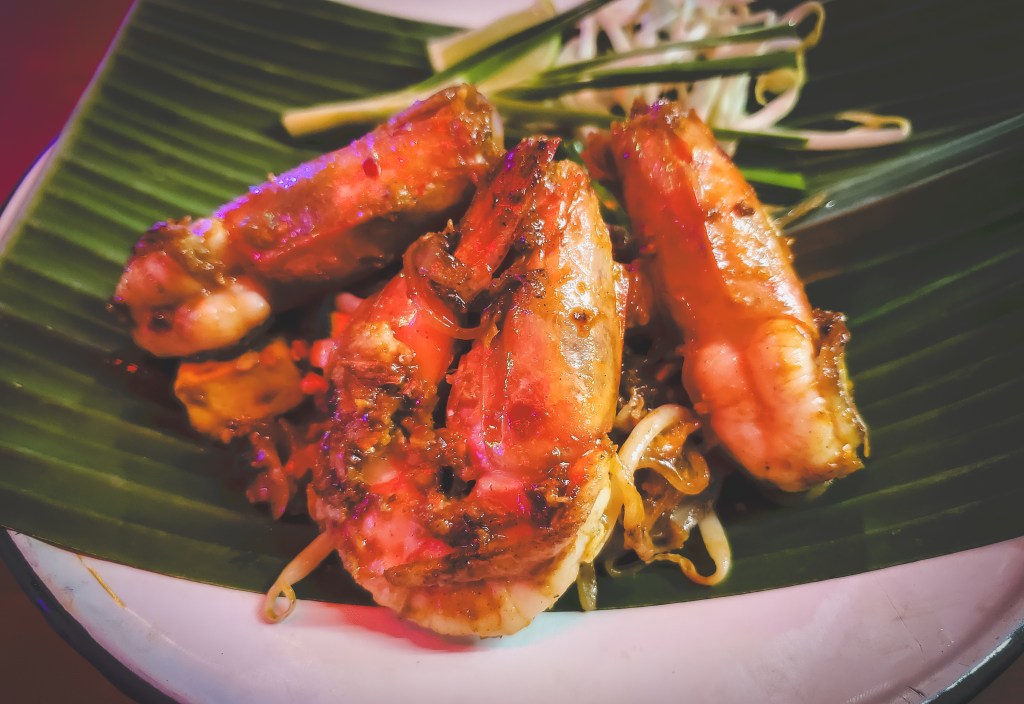
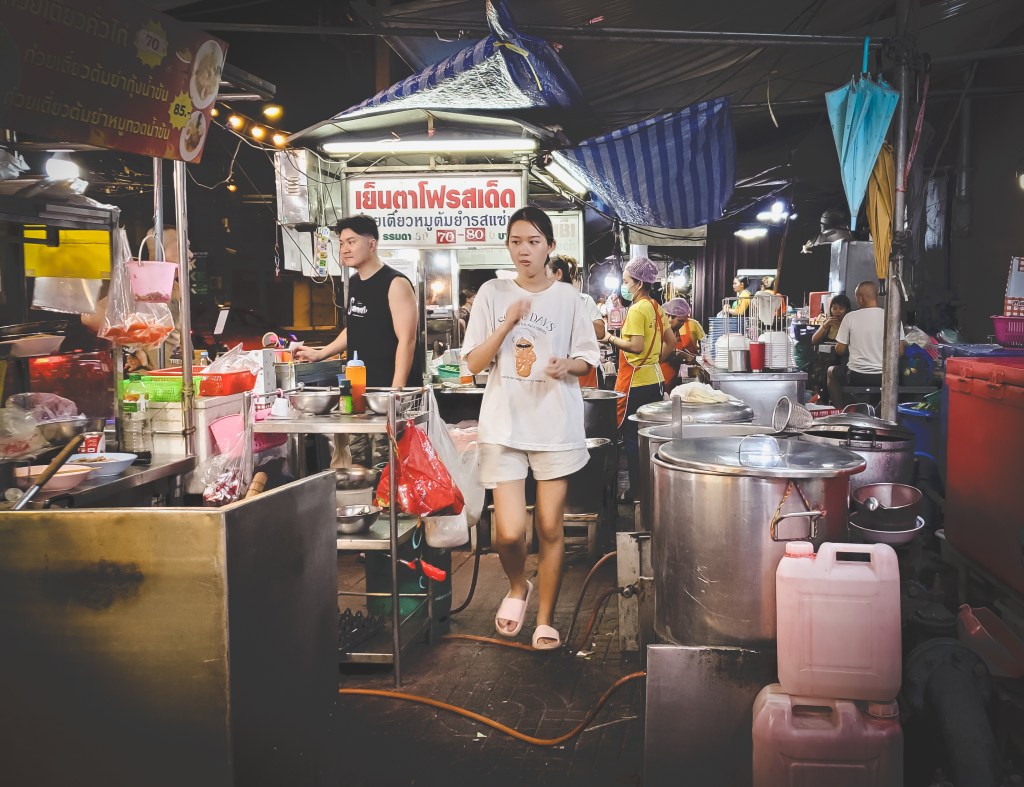
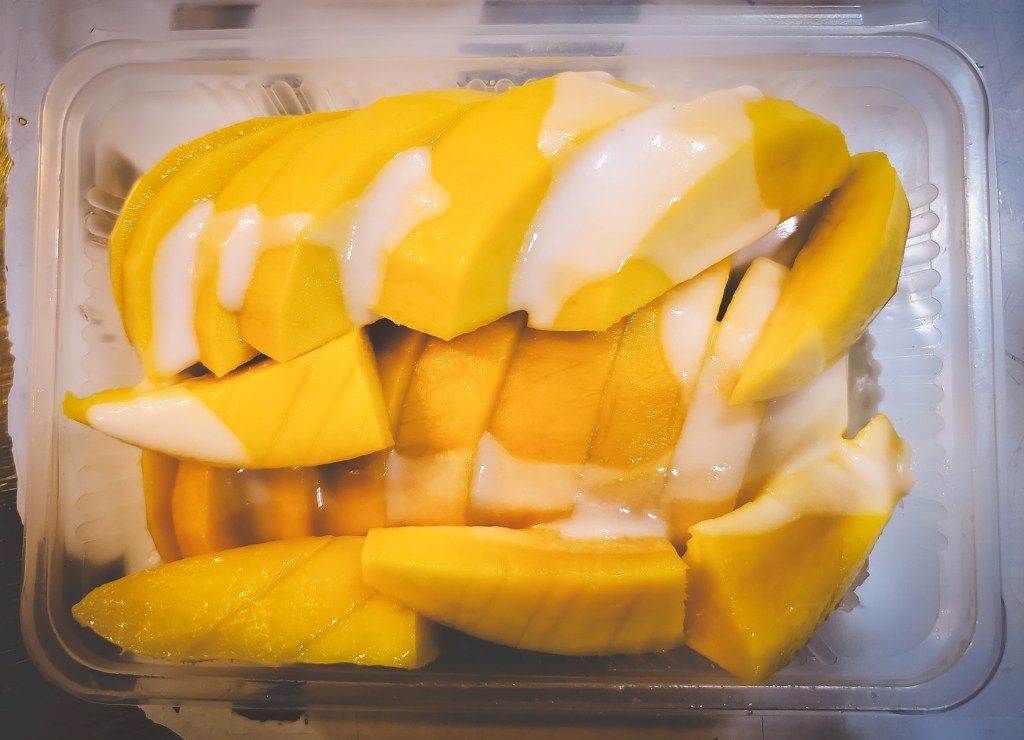
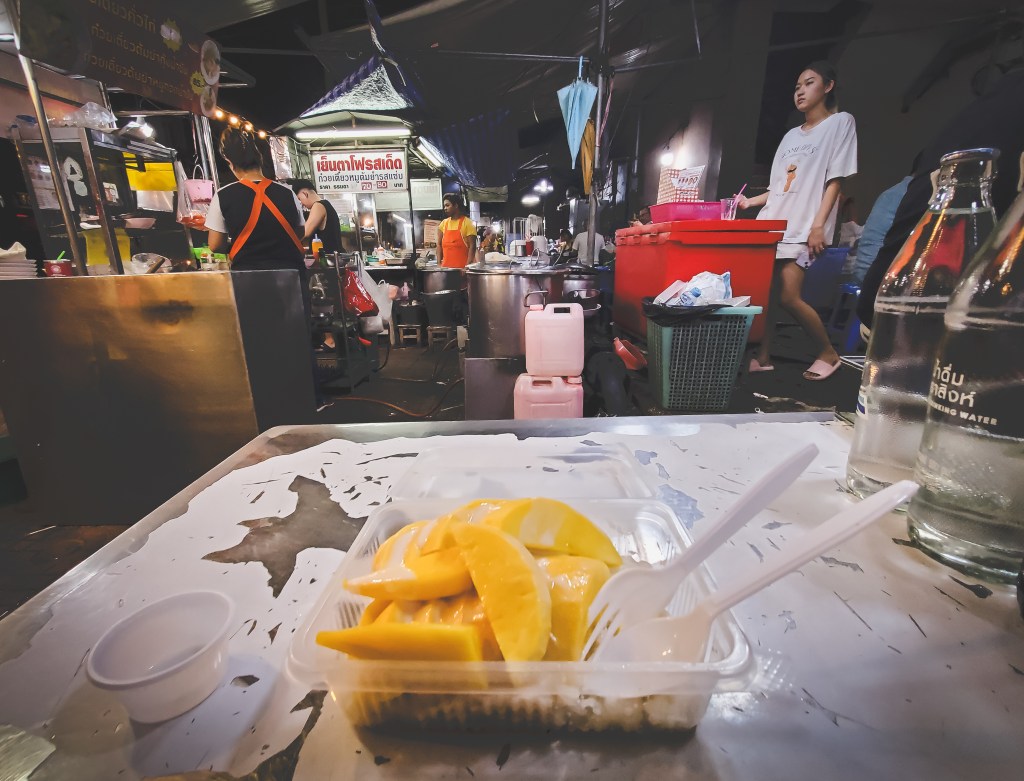
After the last of my afternoon interviews and changing out of my work clothes back at the hotel, I grabbed some phad thai at Pad Thai Fai Ta Lu, not far from the Democracy Monument. The flavours were great and the prawns were quite juicy, but I also can’t say whether I can tell the difference between good phad thai and great phad thai. I swung by another well-known phad thai shop Thipsamai just a few minutes walk away, but the line was massive so I ended up giving it a pass. There’s a little street food stall collective down the street from Thipsamai where I got some mango sticky rice instead.
Day three
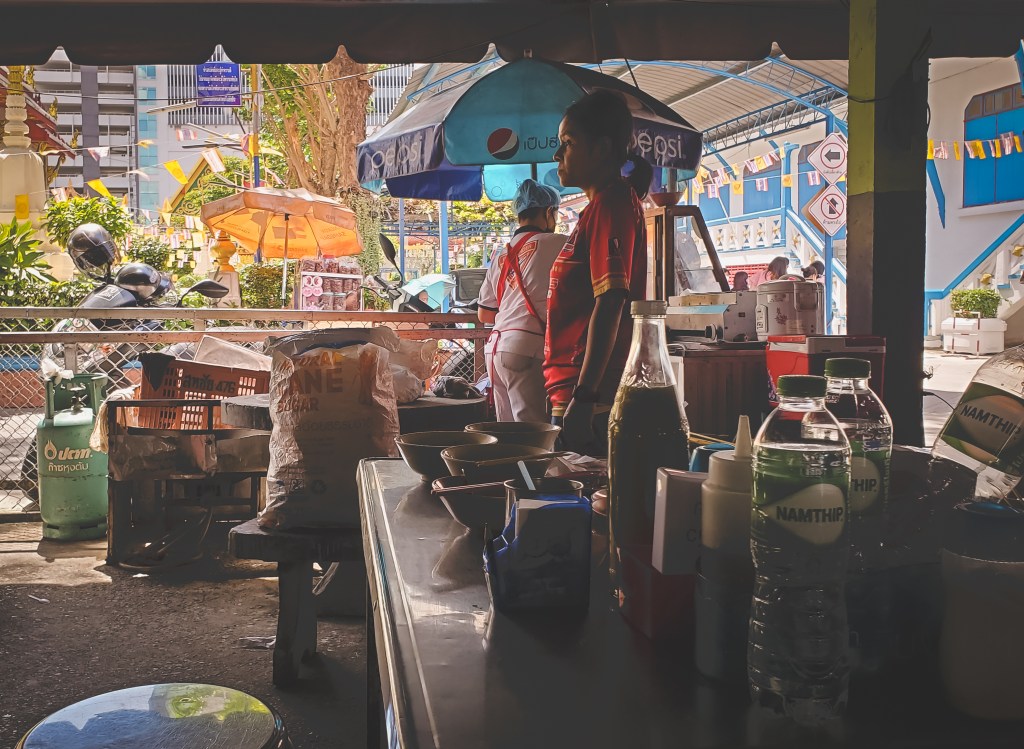
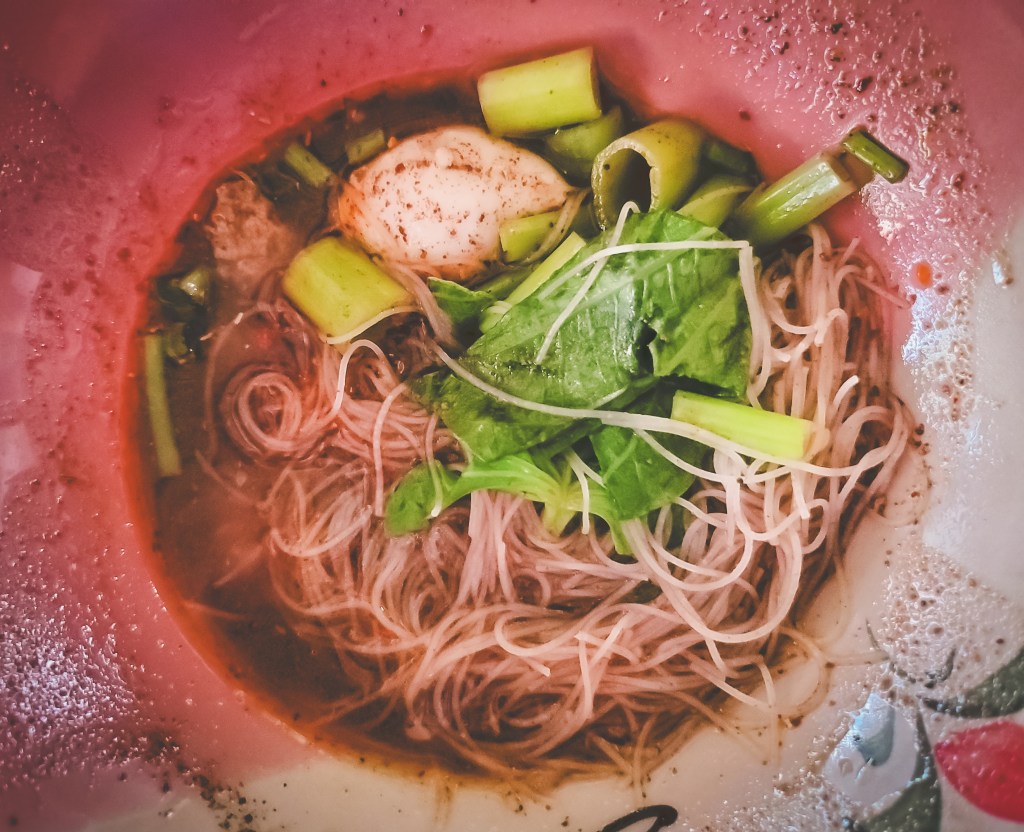
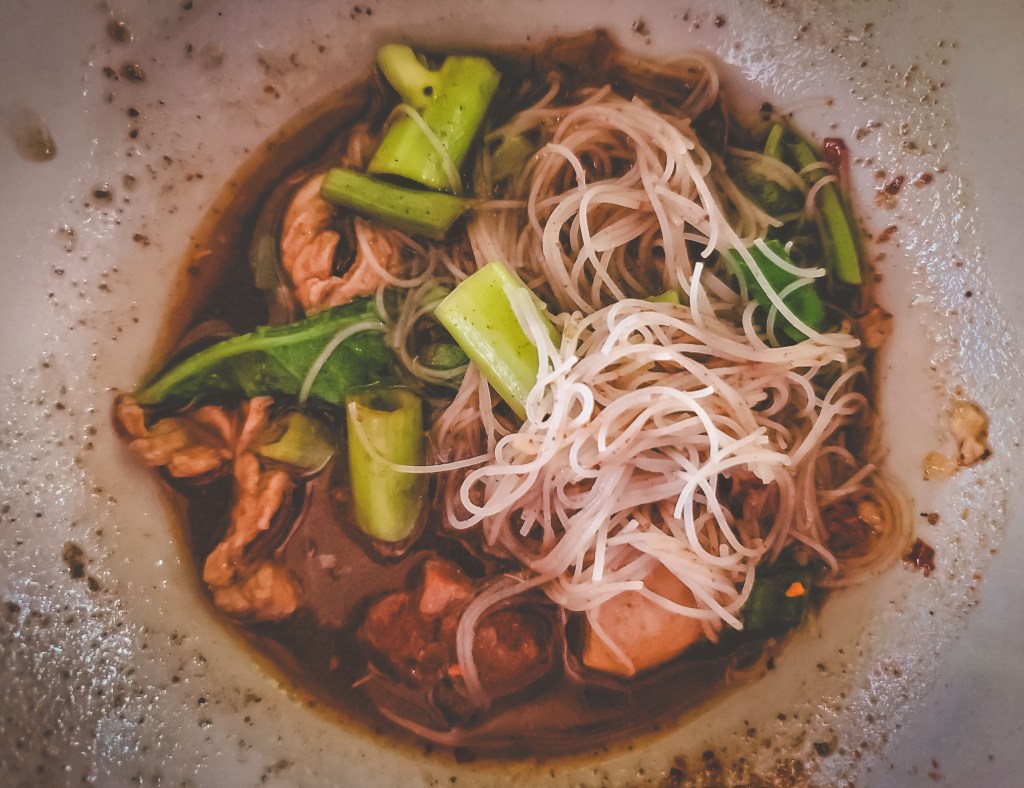
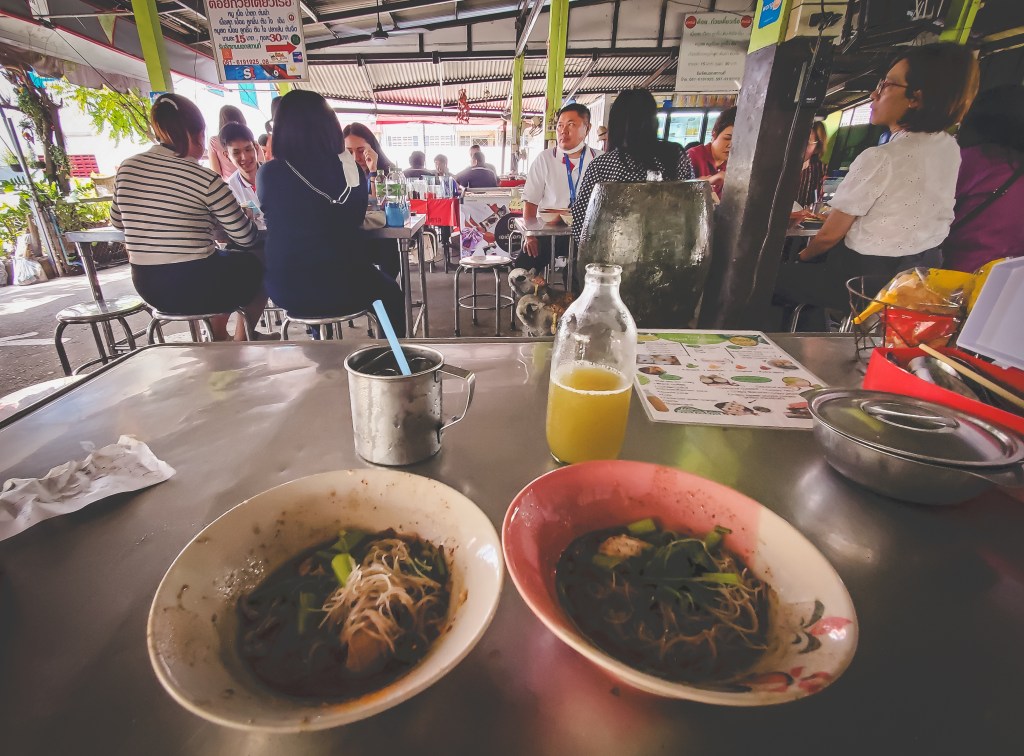
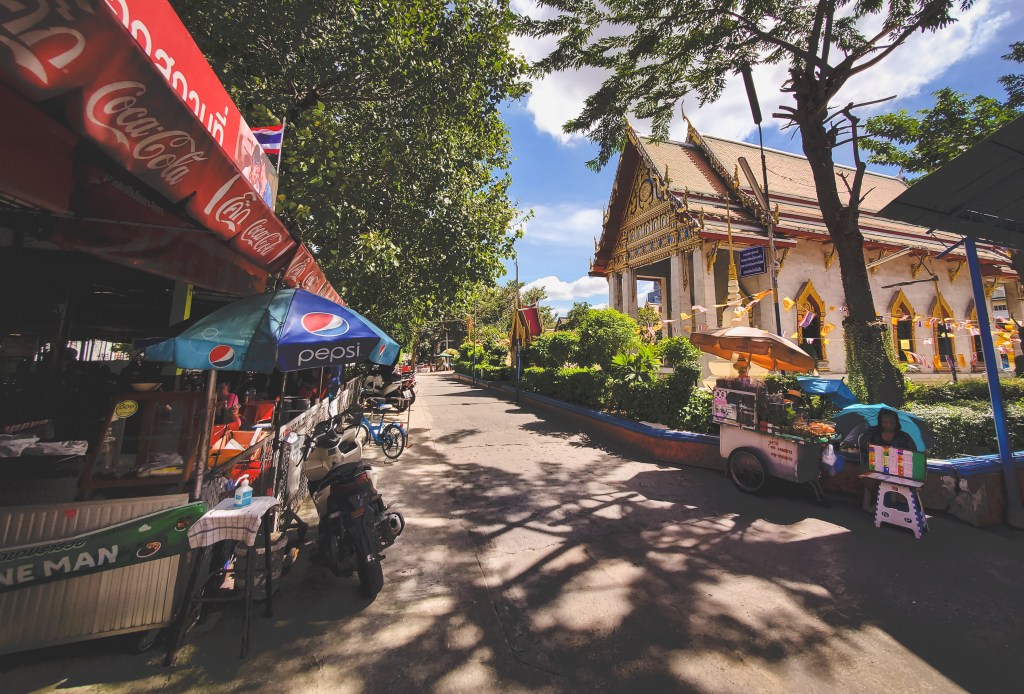
Lunch on day three was boat noodles at Toy Kuay Teow Ruea, a large outdoor eating space tucked away from the main road behind a temple. Boat noodles are a soup noodle dish where the broth is brewed with pig or cow blood, giving it its distinctive dark colouring. Throw in some herbs, garlic, peanuts, dark soy sauce, and meat topics, and you’re good to go. The bowls are quite small too so you can put away quite a few if you’re hungry enough. I settled for two, one with pork and one with beef, but I probably should have had a few more.
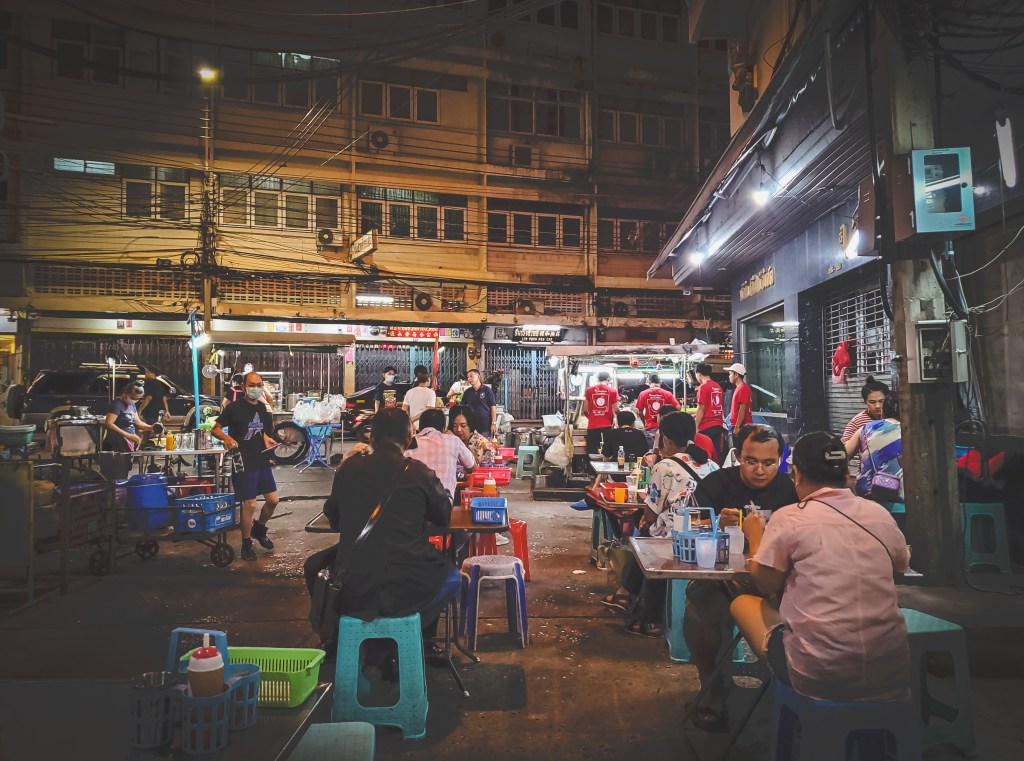
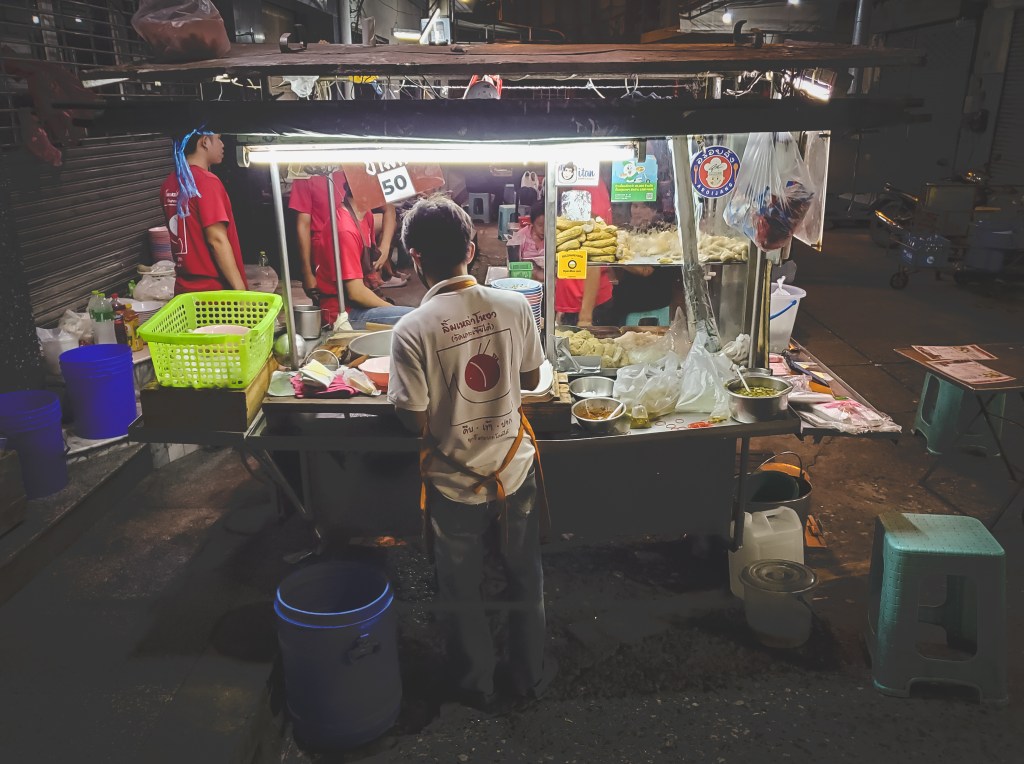
At night, I went over to Chinatown and had fishball noodles at Lim Lao Ngow, a spot famous for its bouncy fishballs. I went during rush hour so I took public transit instead of my usual Grab ride, and it’s a little bit of a walk to get to the place. Once I arrived, I ordered two bowls of the same fishball noodles in soup, and it was delightful. The fishballs were indeed very bouncy and juicy, and the subtle flavours of the broth were exquisite. There’s no actual restaurant space so you’re just sitting on plastic stools outside sharing tables with strangers – a common sight throughout much of Asia.
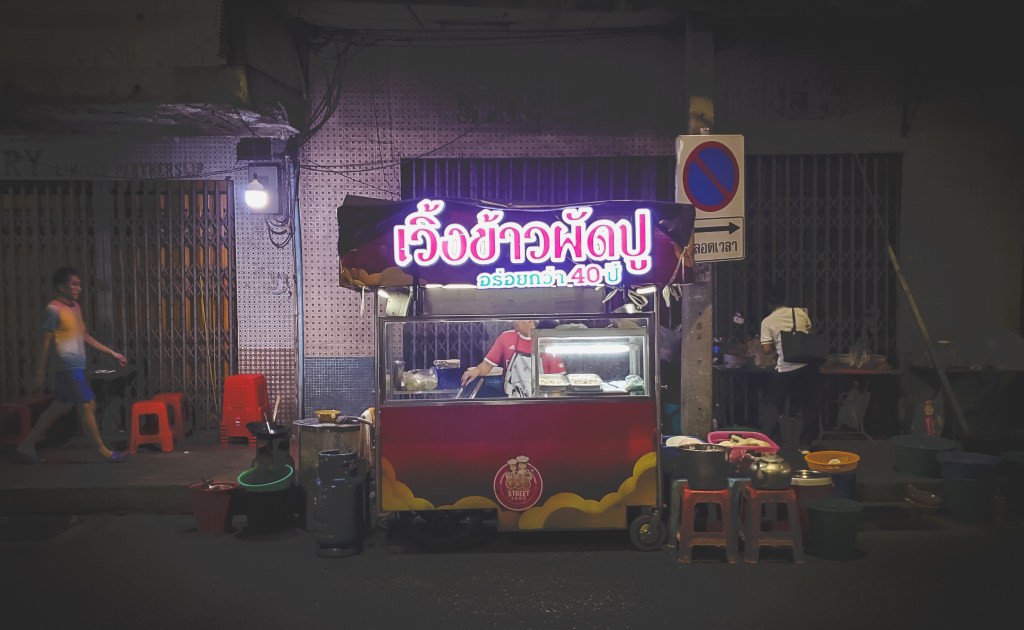
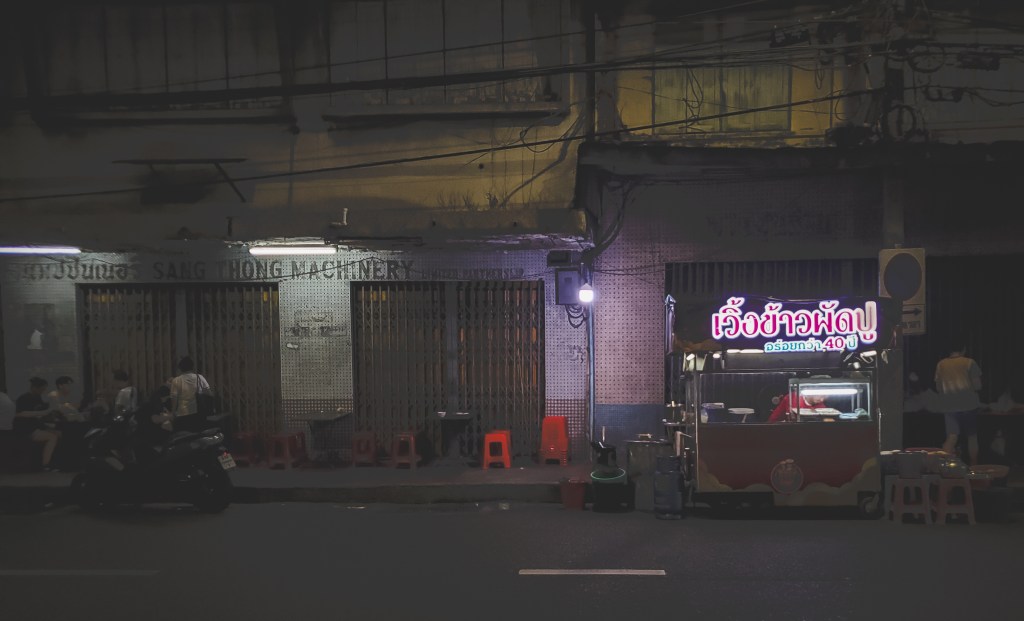
My final meal of the day was at Werng Crab Fried Rice. This is literally just a food cart with some tables and chairs set up on the sidewalk. Its known for its fried rice with big chunks of crab meat, and to be honest I didn’t see anything else on their menu that seemed interesting – for some reason there were some dishes being marketed as being Hong Kong-style. The fried rice was delicious though, and the crab meat was indeed plentiful.

Street shots
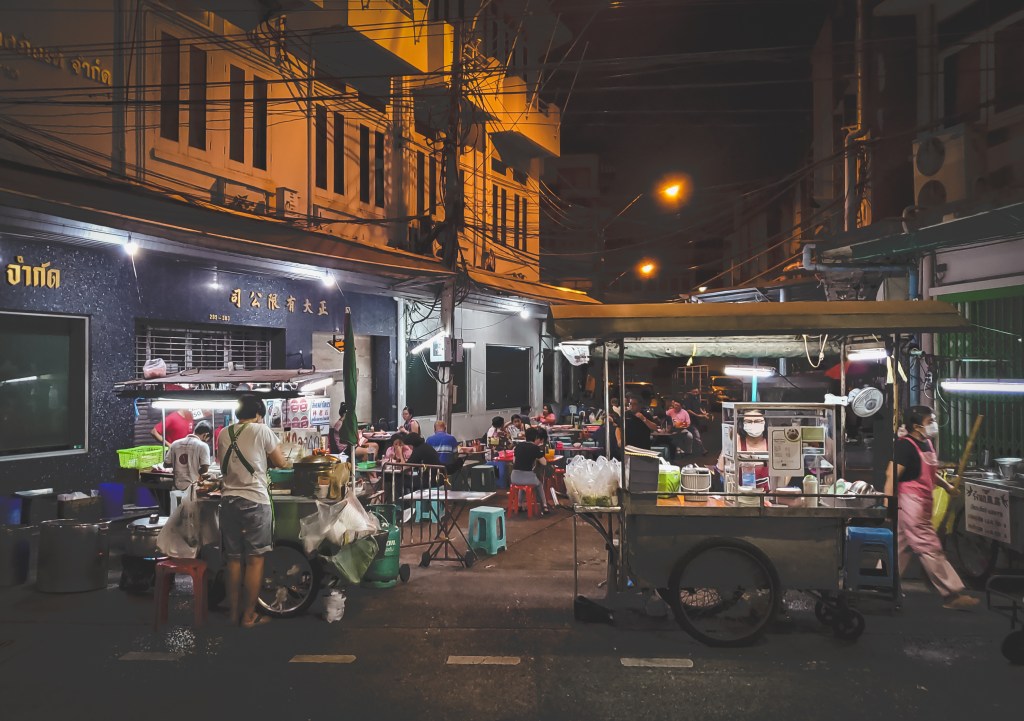
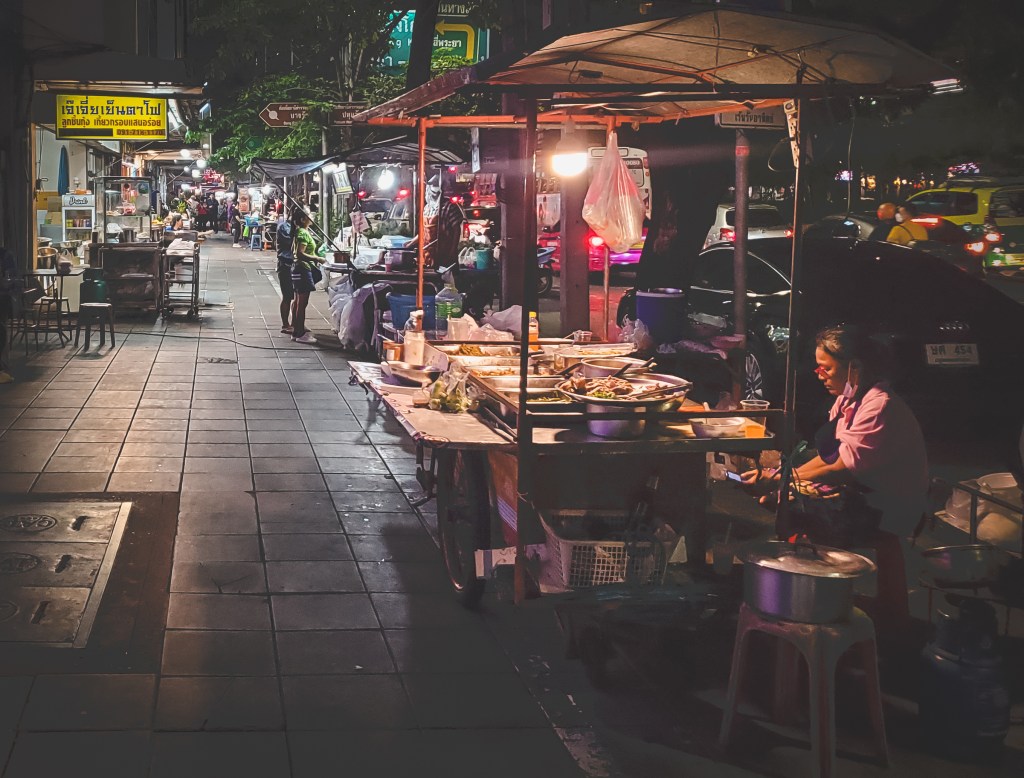
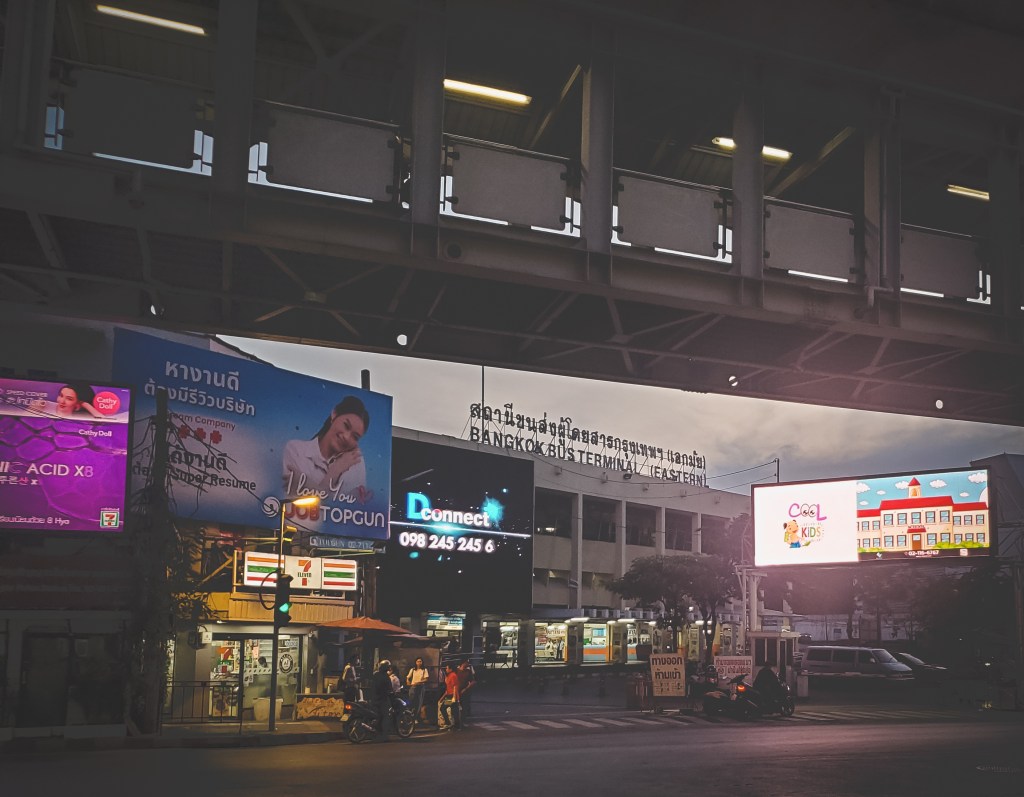
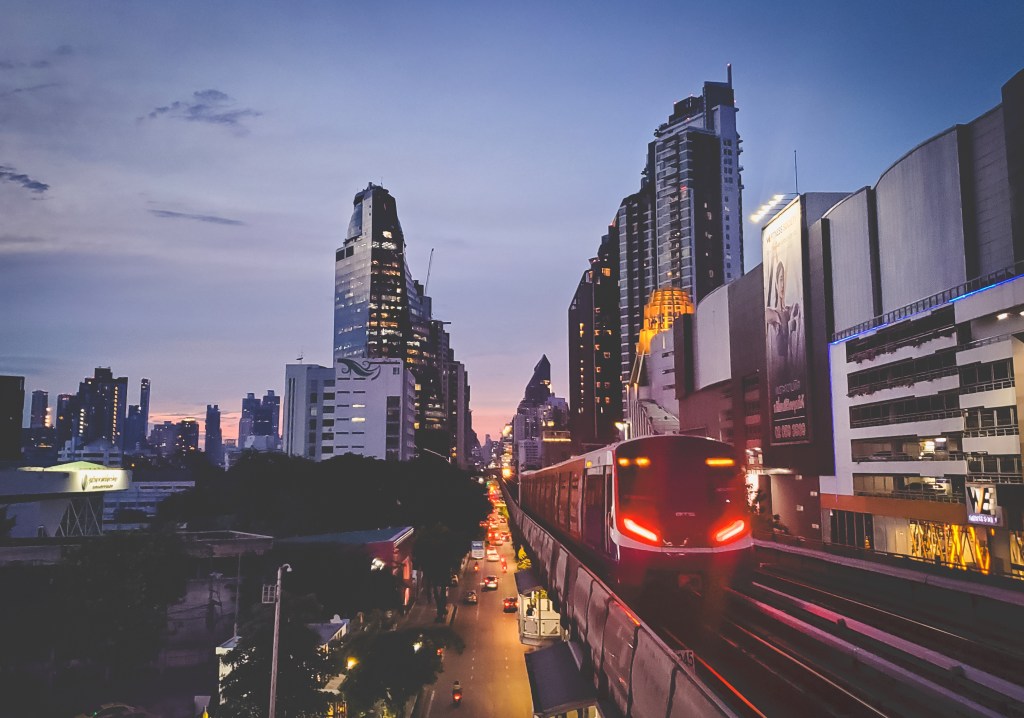
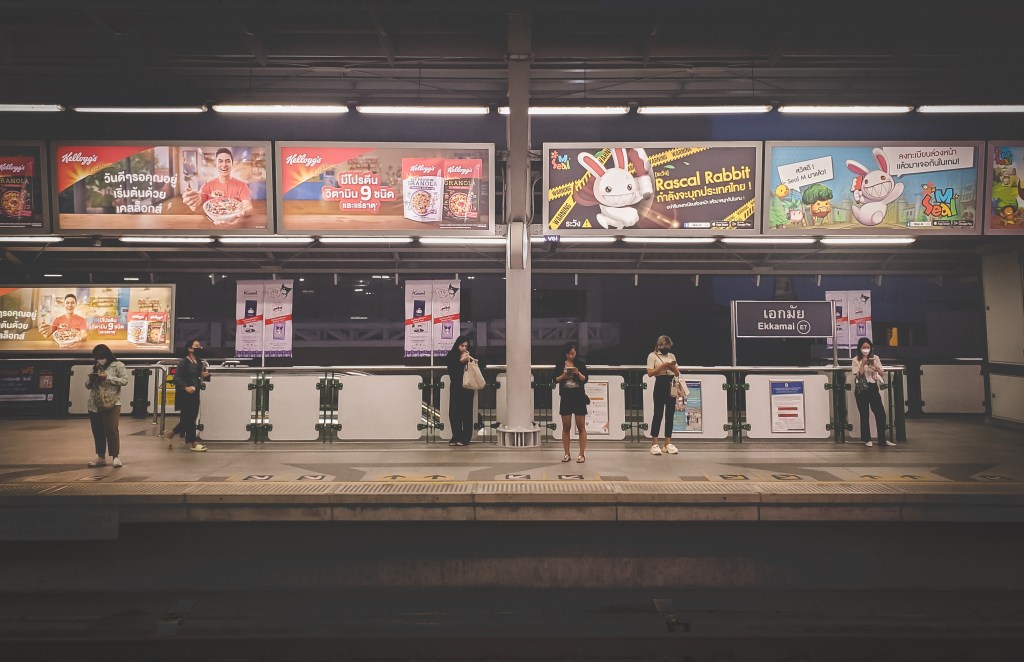
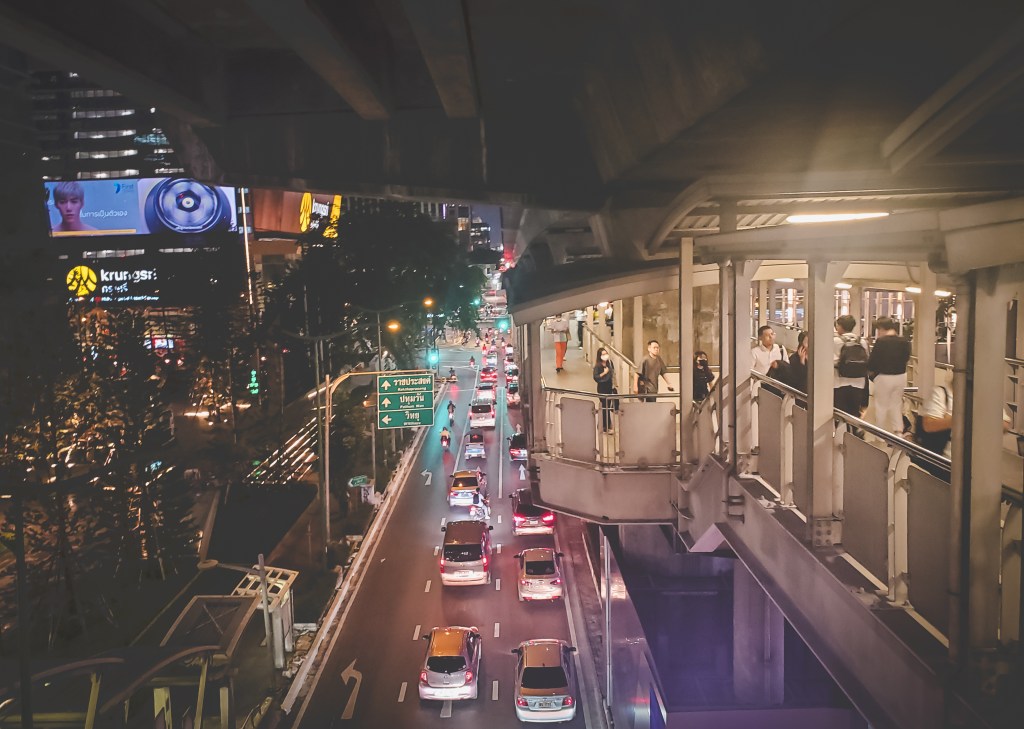
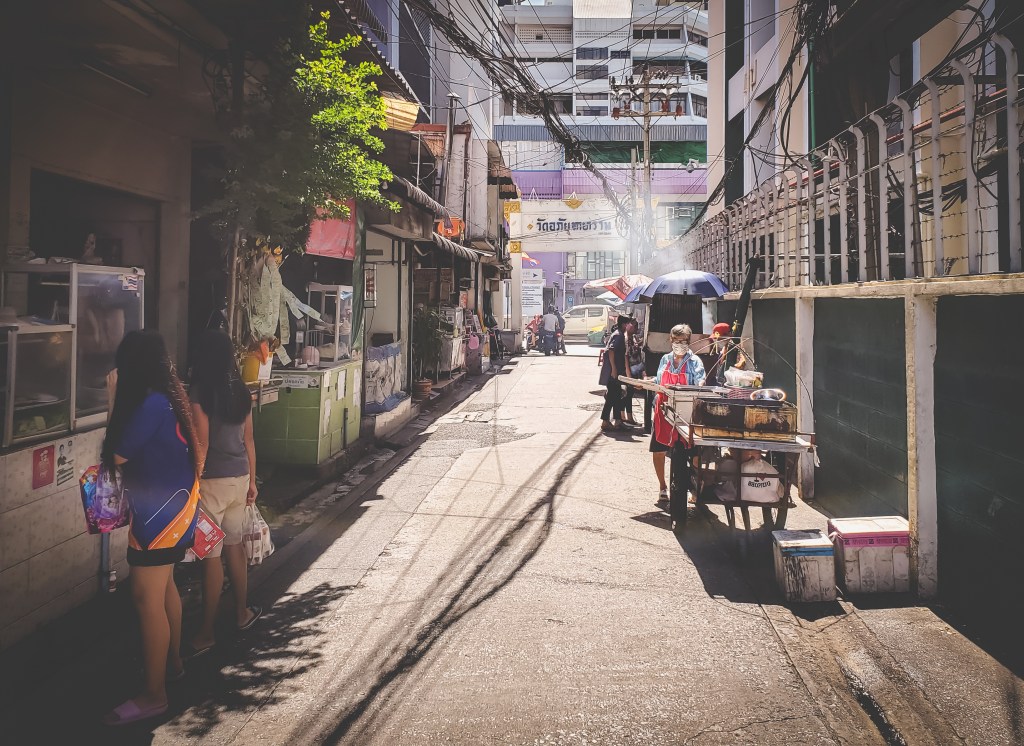
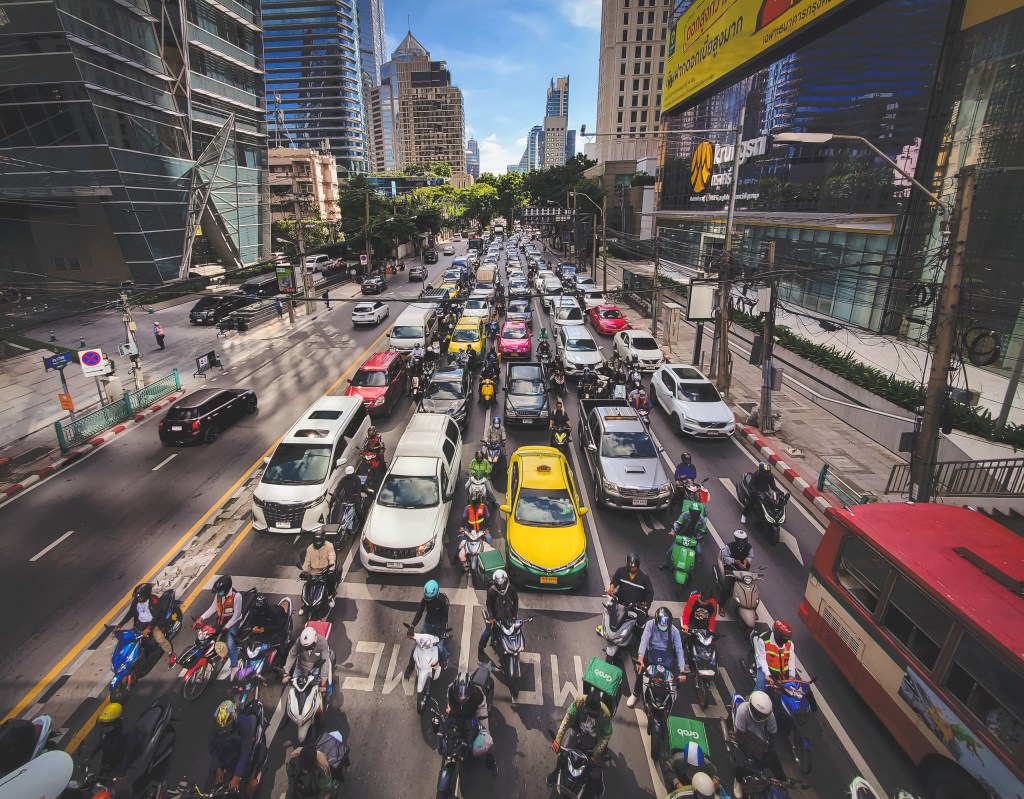
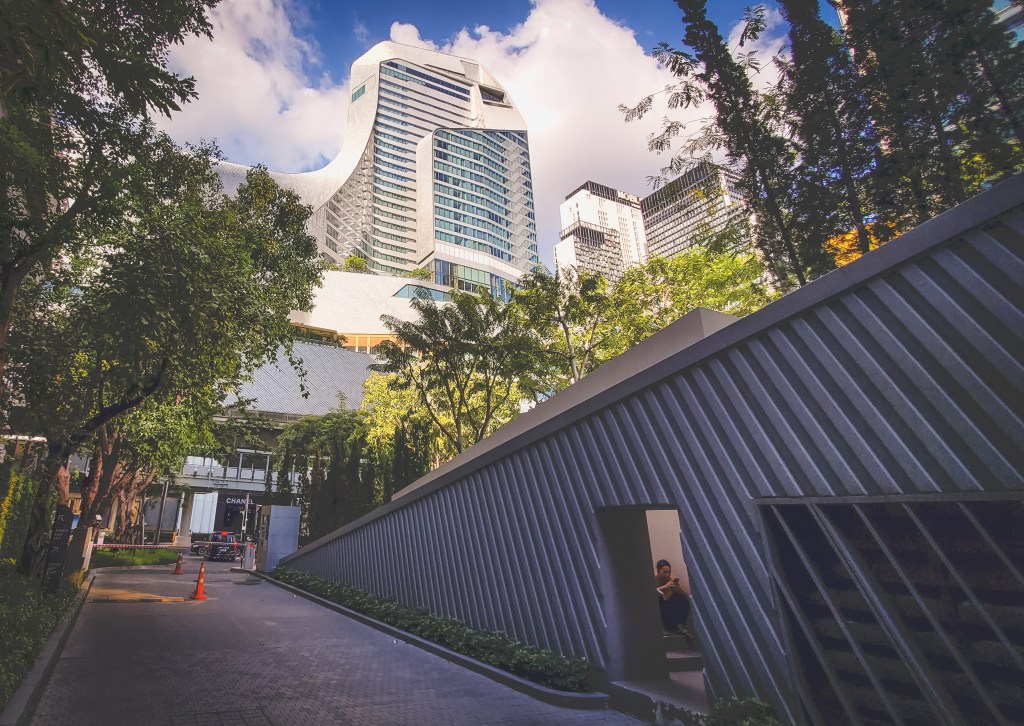
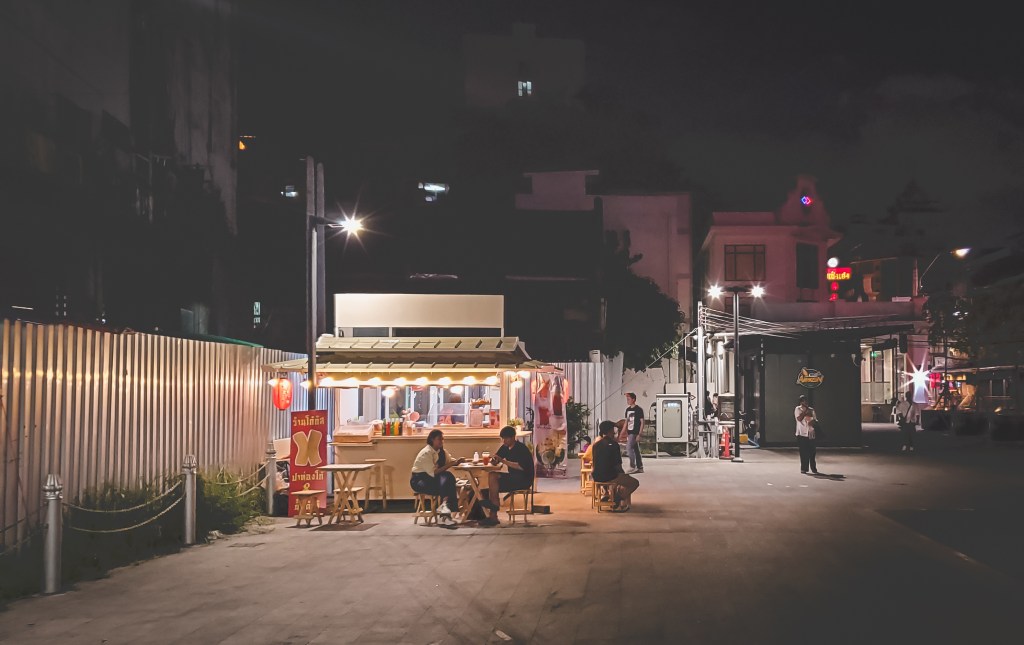
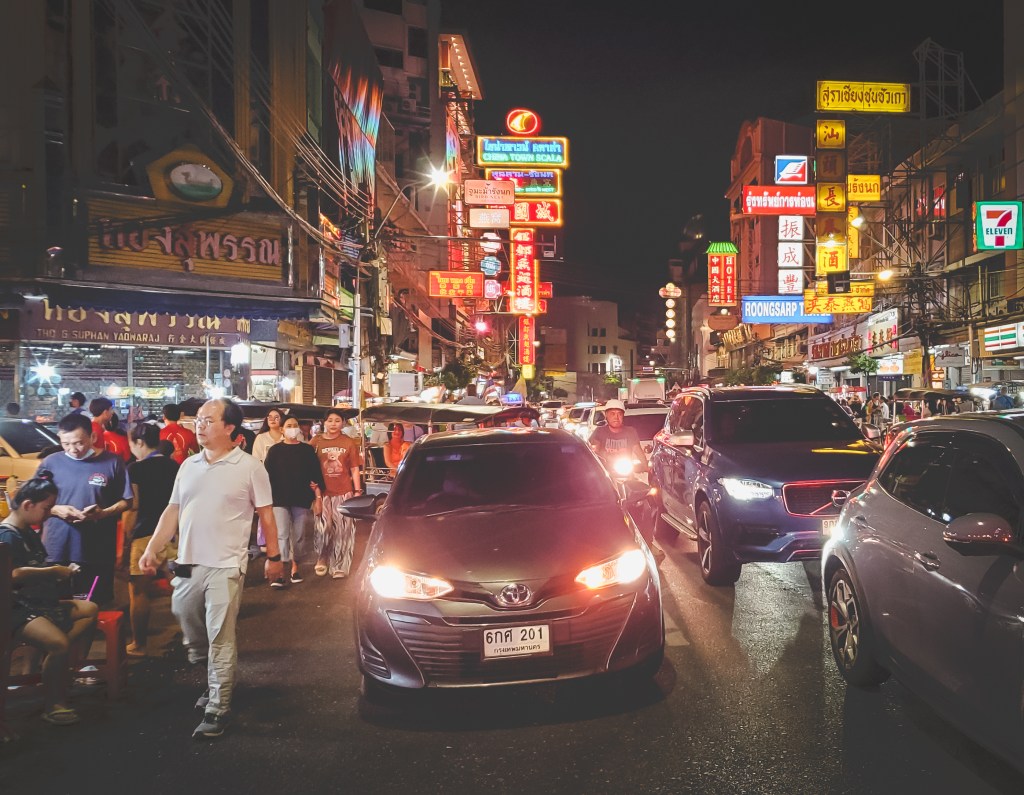
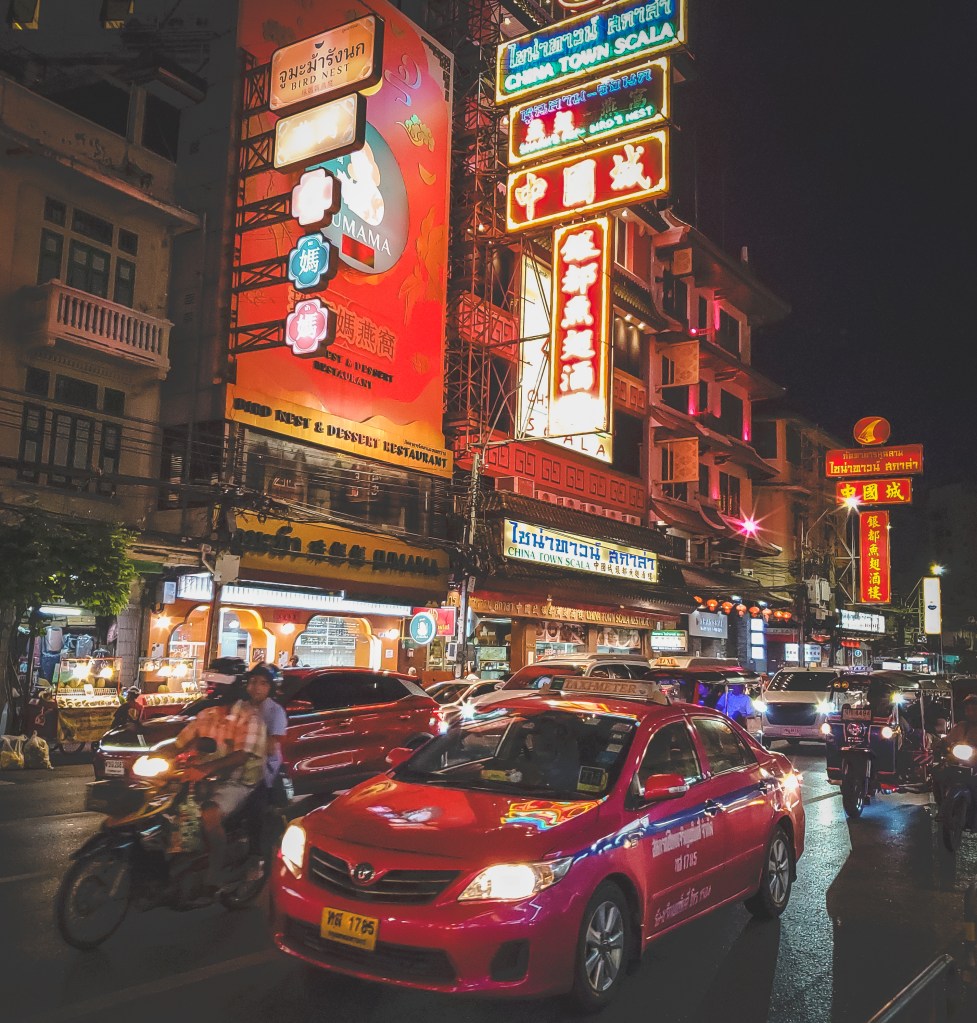
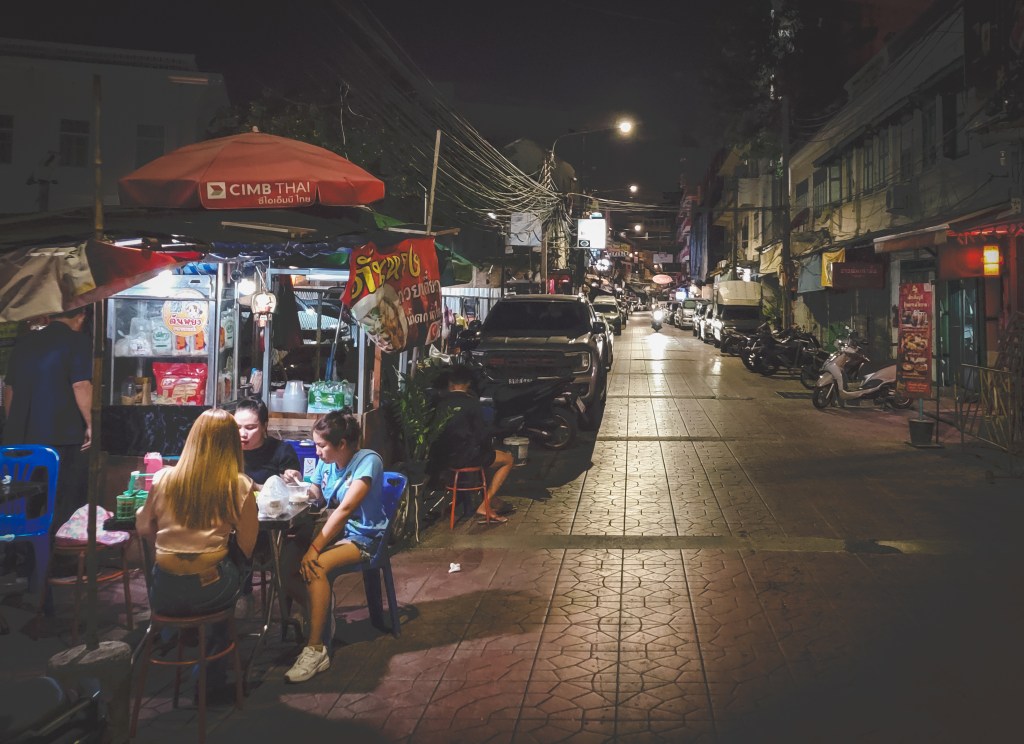
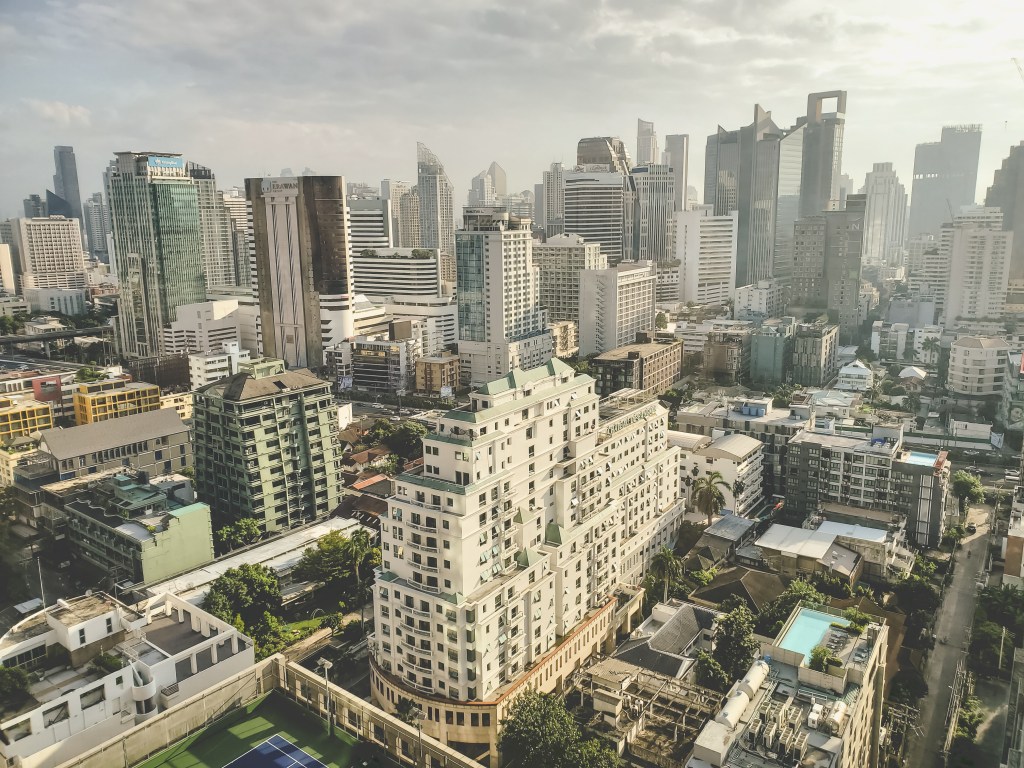
Bangkok is a city with many layers. At street level you get the street food stalls, the cracked sidewalks, the rush hour traffic jams, the quiet corners out of view, and the bright lights and blaring horns of a buzzing nightlife. Then you have the elevated tracks of its skytrains, the pedestrian walkways, the gleaming malls, and the bridges over canals and riverways. Standing above them all are the rows upon rows of skyscrapers and condominiums, luxury hotels and civic monuments. These layers make Bangkok an endlessly fascinating city to walk around in, with or without a camera.



Raan Jay Fai
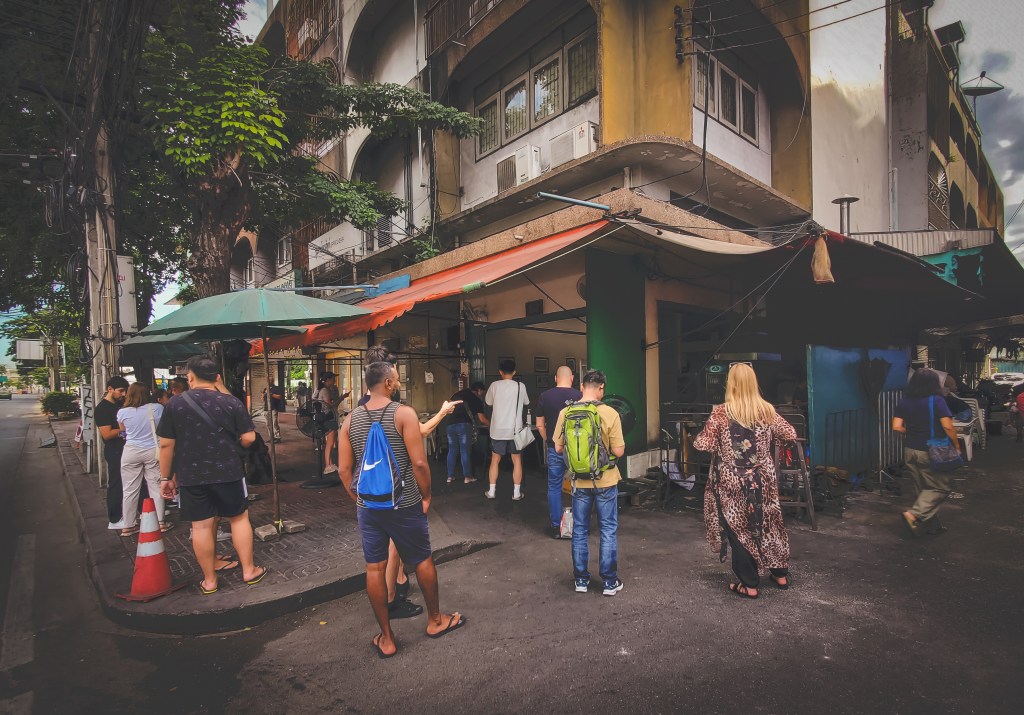
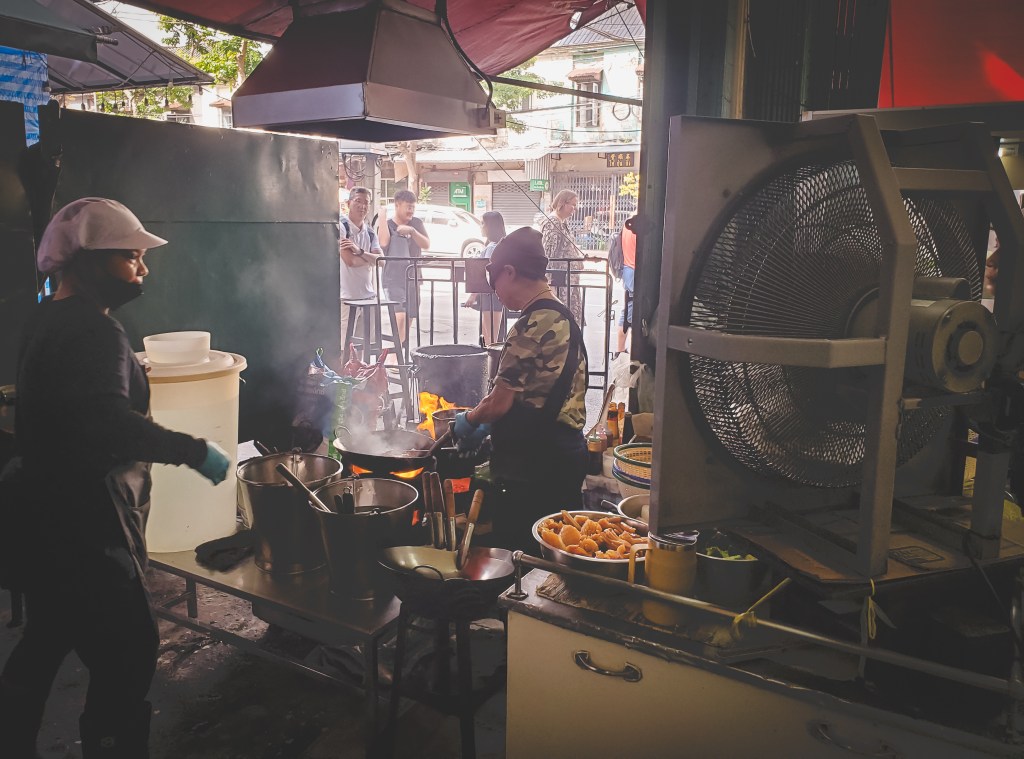
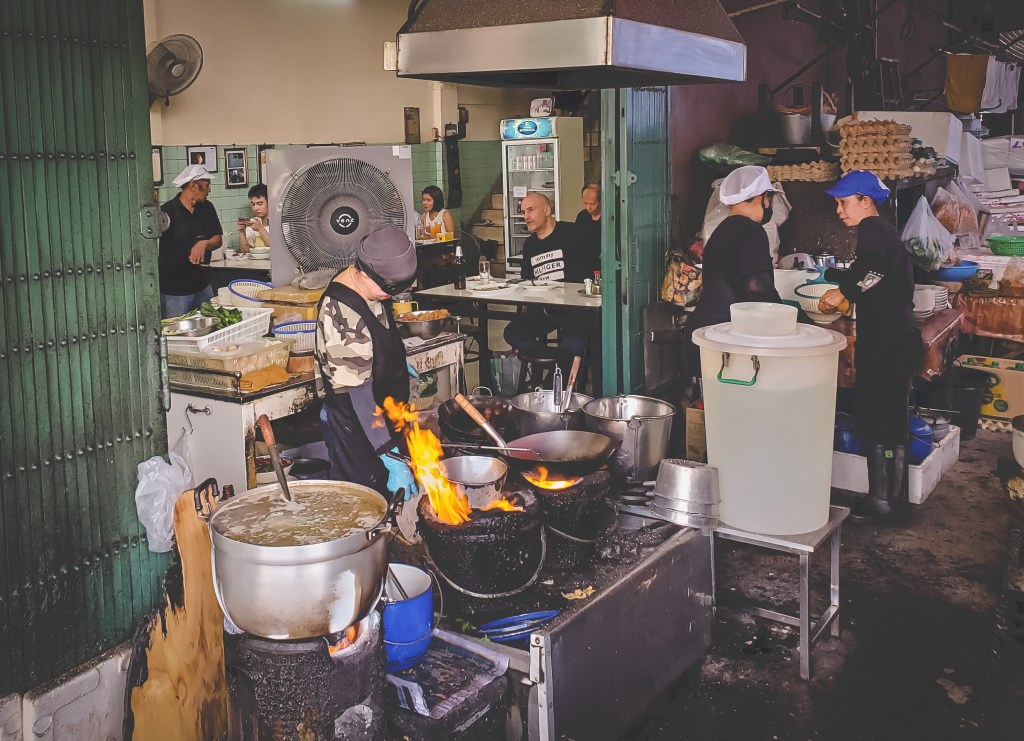
My last stop of note was Raan Jay Fai, a one Michelin star street-side restaurant featured on Netflix and recognised as one of the top 50 restaurants in Asia for the past several years. I did not originally plan to eat here, but one of my morning meetings on my last day fell through, which resulted in a more relaxed schedule that day. Jay Fai’s restaurant is also closed on Sundays, Mondays, and Tuesdays, and with my last day in town being Wednesday, this was the only time I could try and make it.
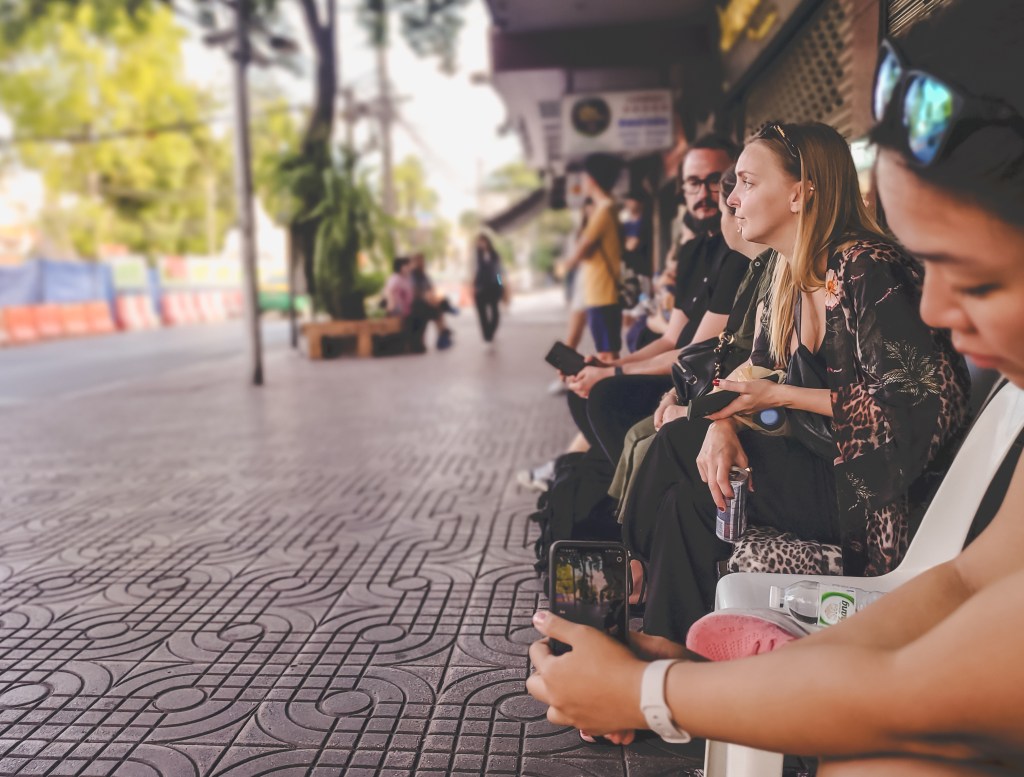
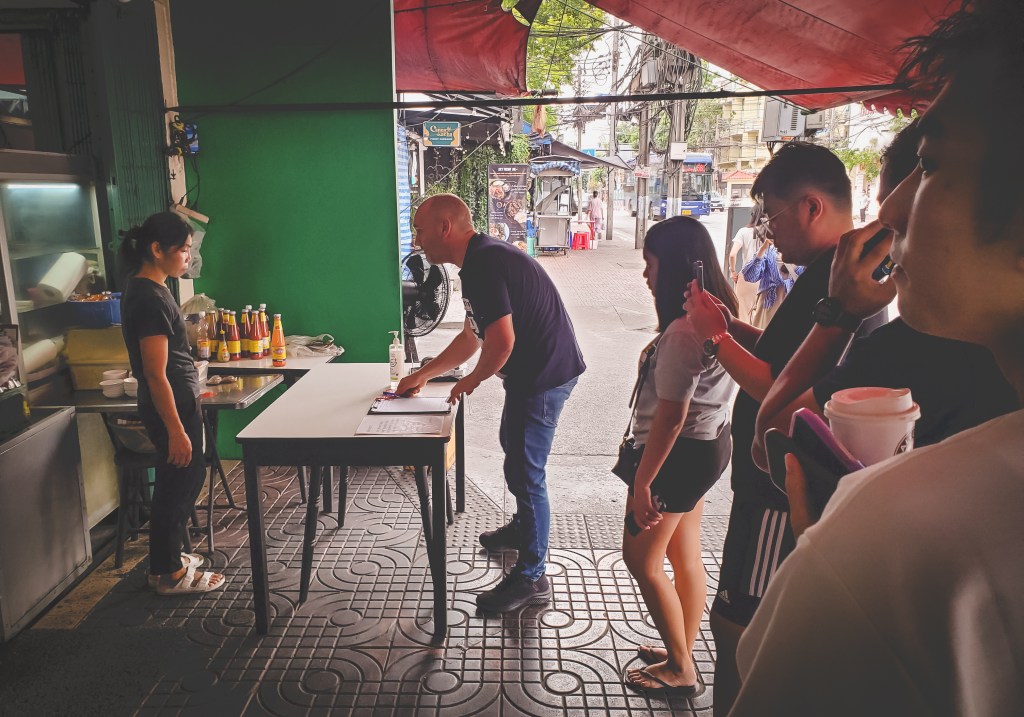
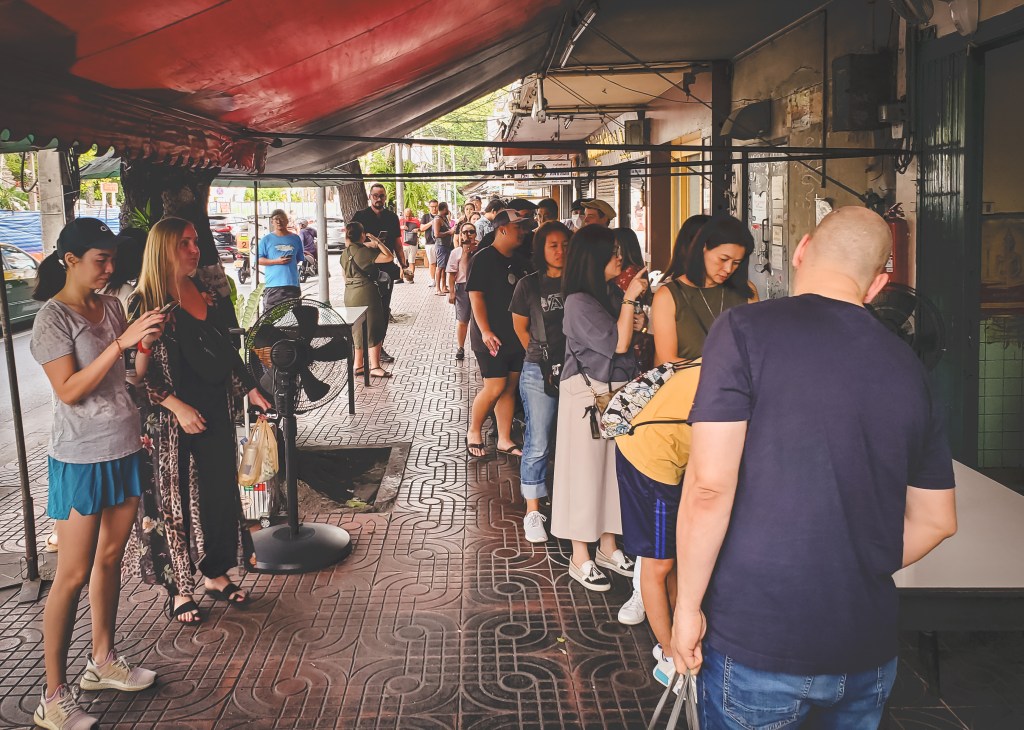
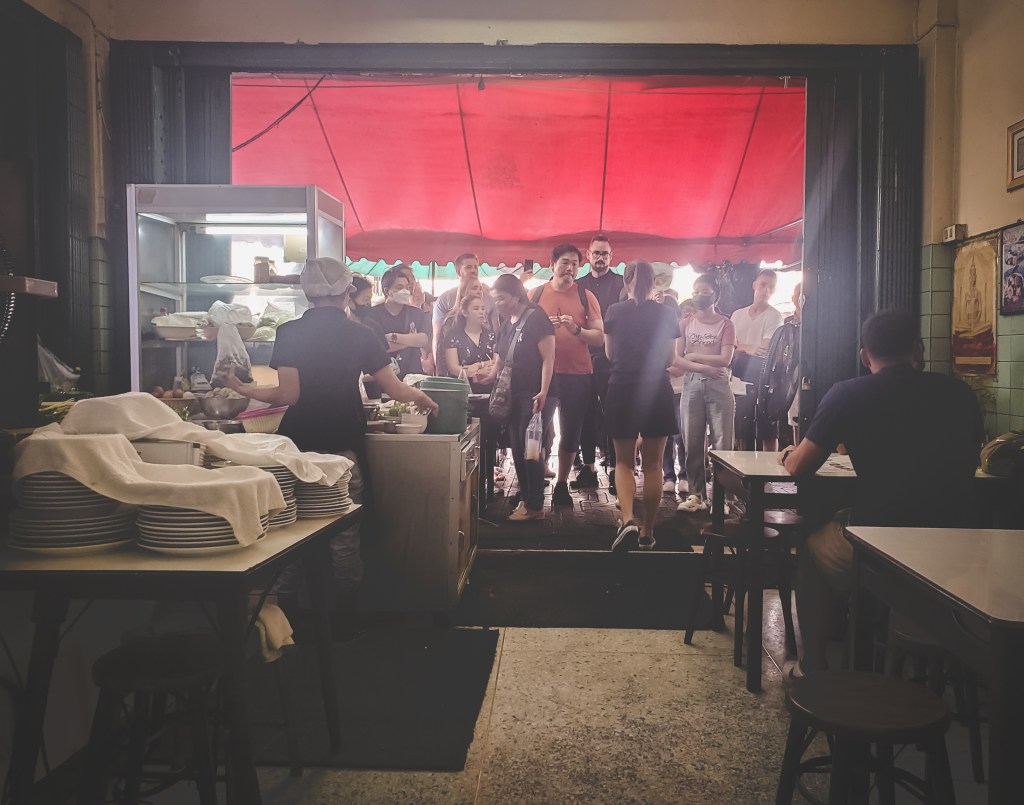
The official opening time of the restaurant is 9:00 A.M., but I had read that people start lining up before 7:00 A.M., so I got up bright and early and snagged the fifth spot in line when I arrived at 6:45 A.M. As the early morning hours progressed, I watched the line gradually get longer and longer behind me, and I felt justified in my decision to get up at such an ungodly hour. At around 8:15 A.M., they set up a sign-up sheet on a table in front of the restaurant, which was essentially what we were lining up to do. After I marked down my position in line and wrote down my name, I lingered with the crowd on the sidewalk surrounding the shop, all of us wanting to make sure we would be close by when our names were called out.
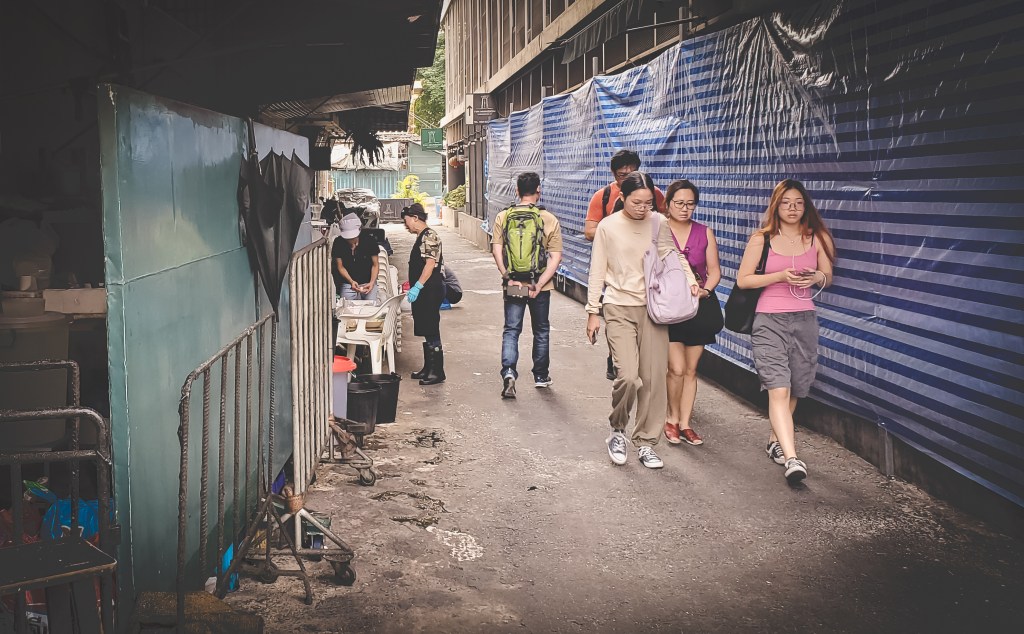
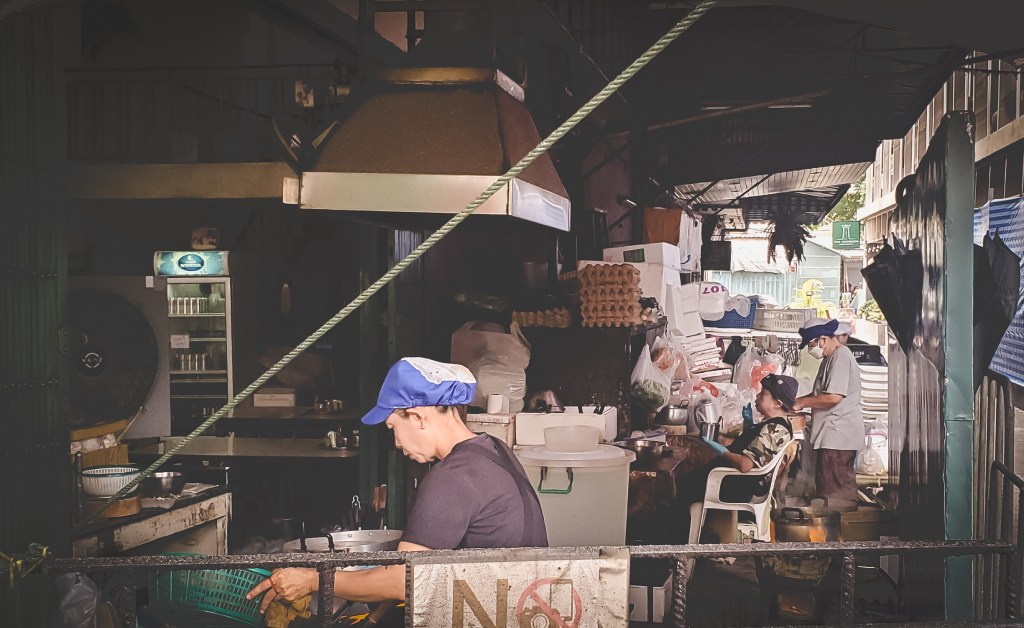
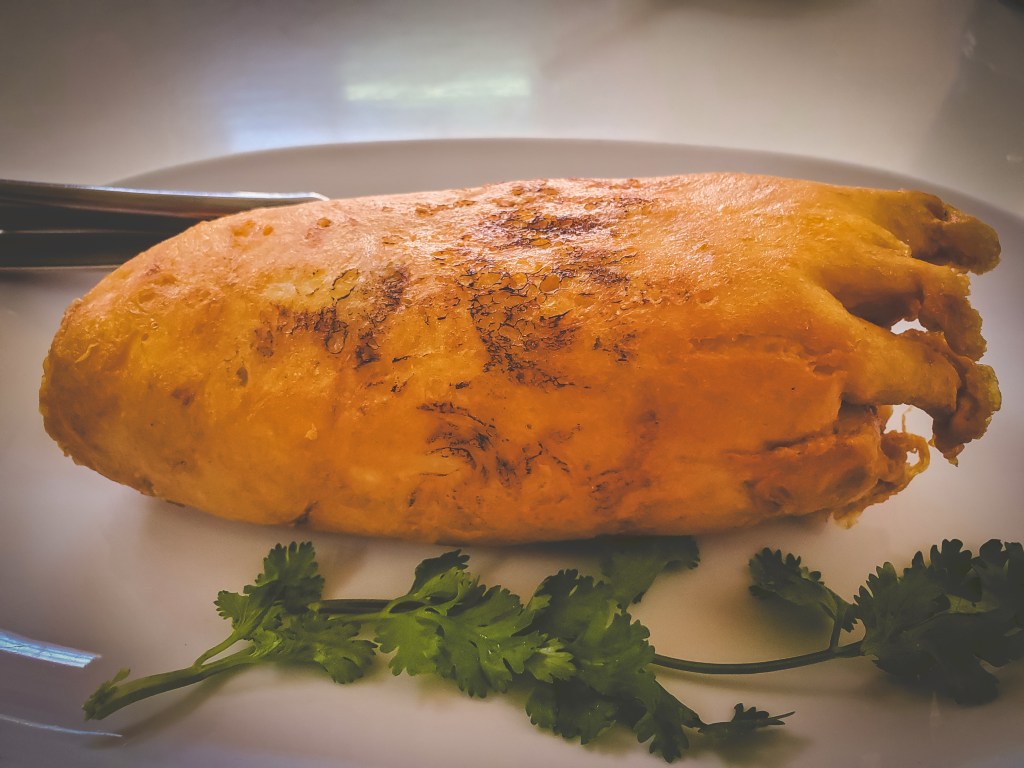
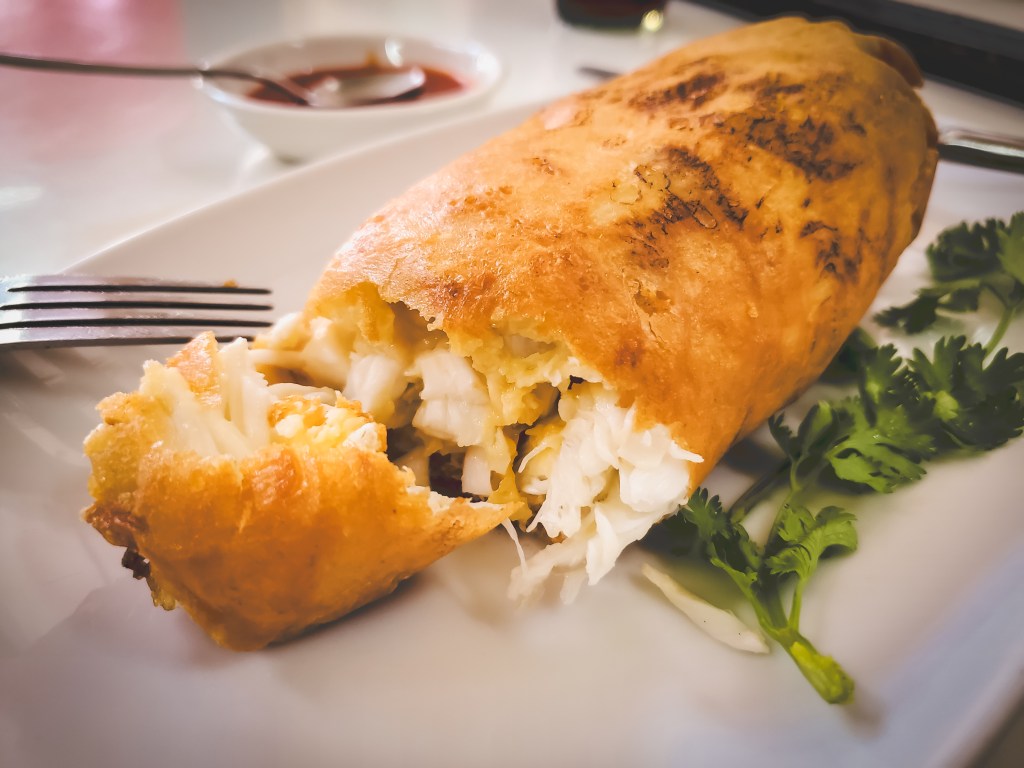
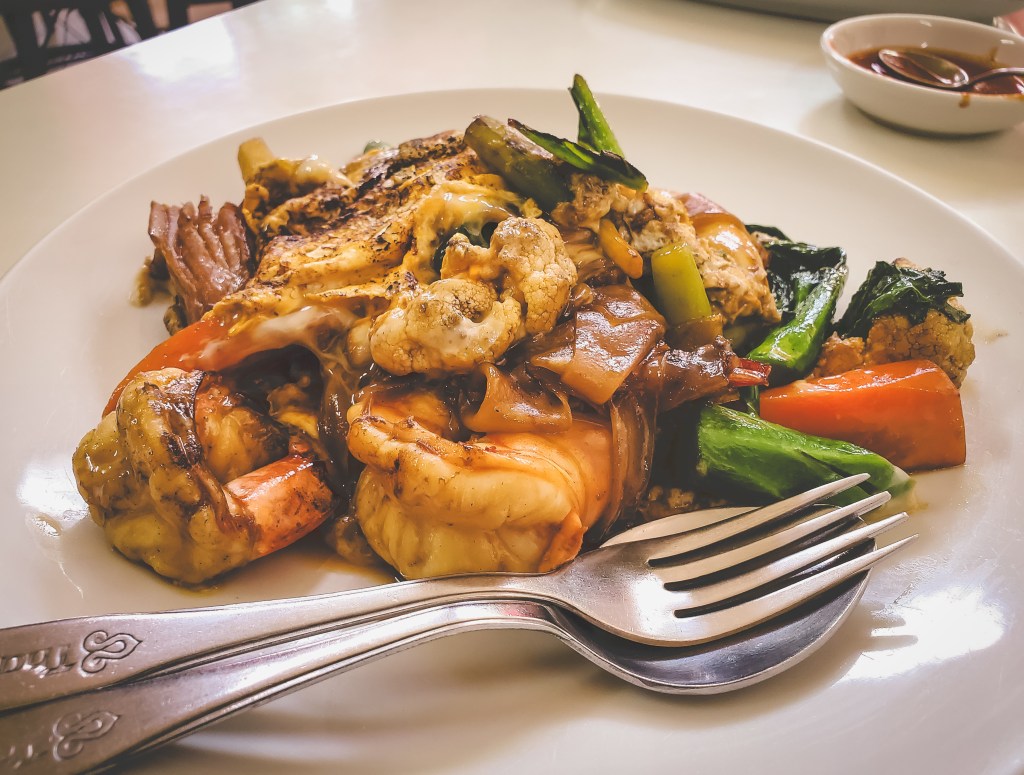
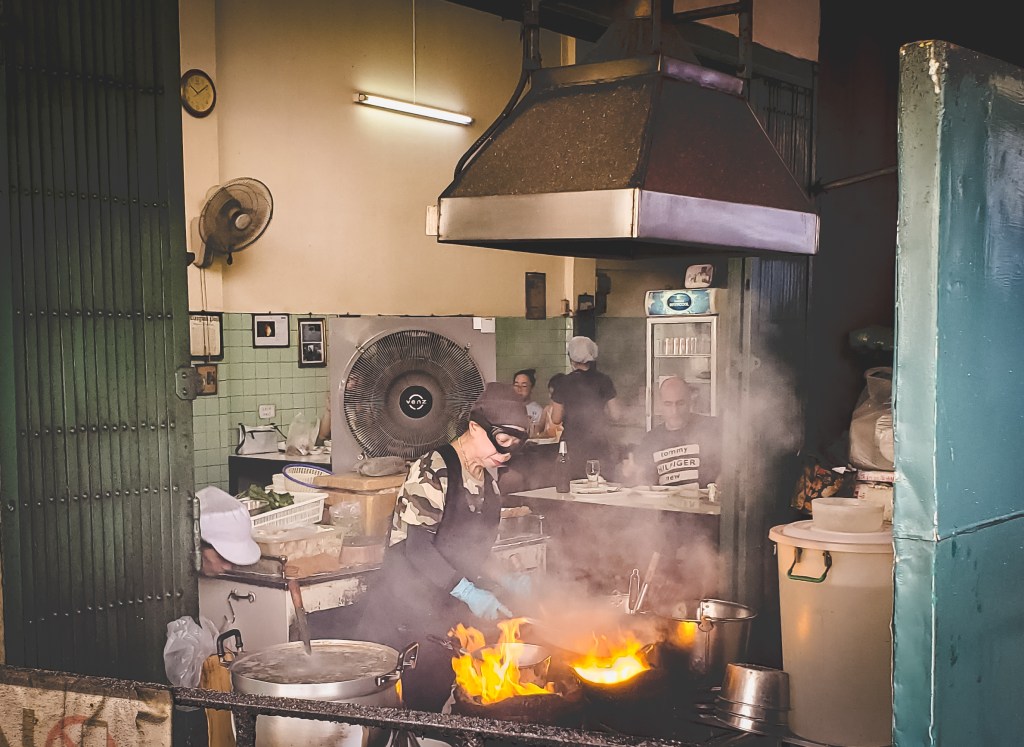
About 15 or 20 minutes before the official opening time, the eponymous Jay Fai arrived in the alley beside the restaurant, where she chatted with her workers and chowed down on breakfast while sitting in a big, white plastic chair outside. Nine o’clock came and went, however, and there was still no sign of the place letting any customers in. Finally at about 9:15 A.M., they began calling out numbers and names from the sign-up sheet, sitting the first 10 or so parties down to start with. The waitress went around to each table in the same order as the sign-up sheet, stopping after the first three tables had ordered their food. These tables got their food before the waitress even came to my table, but the staggered seating and ordering system makes sense given that Jay Fai cooks every dish herself. At 9:30 A.M. I was finally able to get my order in – one of Jay Fai’s famous crab omelettes and a platter of pad see ew – and my food arrived at 9:45 A.M.
The food was amazing. The crab omelette was jam-packed with crab meat, and the egg was cooked perfectly. The pad see ew was so flavourful as well, and with both dishes you could taste the wok hei from her cooking technique. Jay Fai charges a premium on these dishes, mind you, with the prices being many times the price of other street food in Bangkok, so it’s up to you whether this sort of experience is something you would be willing to pay for. A friend of mine is of the opinion that, while the food is good, the restaurant is overrated because of the high cost of the meal and the long waiting times. To me, the experience was worth it – the food was excellent and there are some things worth waiting for. There’s an argument that could be made about how certain Asian cuisines are perceived as being lower value in terms of what people are willing to pay. But yes, if you’re used to the prices of other street food stalls in Bangkok and you do not have the time or the patience to wait for hours, then Raan Jay Fai may not hit in the same way for you as it did for me.

Final thoughts
Thai food has not ranked among my favourite cuisines – I do like it on occasion, but even within Southeast Asia I prefer Vietnamese and Malaysian/Singaporean, not to mention Japanese, Korean, Taiwanese, and local Hong Kong dishes in the wider Asia region – but I feel like I gave it an honest shot on this trip. While I don’t think this trip moved it up any places, I did come away with a new appreciation for the range of flavours and textures that can be found in the Bangkok street food scene. There’s everything from the savoury spice of tom yum to the gentle, subtle flavours of decades-old beef stew, to the rich boat noodle broths; there’s the crispiness of stir-fried kway teow, the springiness of fish balls, and the joyful mouth feel of a bite packed to the gills with crab meat and wok-fried omelette; and then there are some all-time comfort foods in phad thai, pad see ew, and mango sticky rice. Thai food definitely holds its own.
 erniegoes